
• Home
  • About
  • CRAIGBALL.COM
  • Disclaimer
  • Log In

Ball in your Court

~ Musings on e-discovery & forensics.

Ball in your Court

Monthly Archives: January 2015

Surveys are a CURSE in E-Discovery

31 Saturday Jan 2015

Posted by craigball in E-Discovery

≈ 4 Comments

supid surveyThis is a rant.  So, it will be mercifully short and posted on the weekend when few stop by.  I’m fed up with e-discovery surveys.  I mean those ersatz “studies” that solicit opinions about things that could be measured but aren’t, polling those sufficiently underemployed to respond and tallying and touting their responses as if they signified more than attitudes and prejudices.

Surveys have almost entirely displaced measurement in e-discovery.  When you scratch the surface of the many so-called studies of e-discovery that aspire to an academic aura, they’re just studies of surveys of attitudes.  No statistical rigor can make a lot of wild ass guesses anything more than a lot of wild ass guesses.  The studies do a decent job documenting what people think might be fact, but tell us nothing about fact because guesses about measurement are not the same as measurement. No, not even when you gather many guesses.

The Blair & Marron BART document study famously showed us that perception of e-discovery outcomes and measurement of those outcomes diverge markedly.  Polls don’t tell us where the money goes in e-discovery; and, why should we be surprised by this?  A poll of ancient Greek scholars could have “proven” the flatness of the Earth.  Seventy-seven percent of Americans polled believe angels are real and among us.  People believe what suits them; but, smart people believe what they can measure.

My point is this:  when it comes to e-discovery, virtually everything we hear—certainly every study of EDD cost I’ve ever seen—is based on processes wholly devoid of real measurement.  Authors tally up guesstimates from surveys then pass them off as scholarship.  It’s like taking tranches of bad mortgages and securitizing them as triple-A paper.  We all know how well that worked.

So, enough with the silly surveys!  They’re tired.  They’re useless.  They’re bunk.  Let’s try defining and measuring to arrive at numbers that mean something.  We’re not playing Family Feud here.  I don’t want to know what the survey says.  I want genuine metrics.

Share this:

  • Click to email a link to a friend (Opens in new window) Email
  • Click to print (Opens in new window) Print
  • Click to share on X (Opens in new window) X
  • Click to share on Facebook (Opens in new window) Facebook
  • Click to share on LinkedIn (Opens in new window) LinkedIn
Like Loading...

Data Recovery: Lessons from Katrina, Revisited

31 Saturday Jan 2015

Posted by craigball in Computer Forensics, General Technology Posts

≈ 2 Comments

wet HDDThis is the twelfth in a series revisiting Ball in Your Court columns and posts from the primordial past of e-discovery–updating and critiquing in places, and hopefully restarting a few conversations.  As always, your comments are gratefully solicited.

Data Recovery: Lessons from Katrina

[Originally published in Law Technology News, April 2006]

When the sea reclaimed New Orleans and much of the Gulf Coast, hundreds of lawyers saw their computers and networks submerged.  Rebuilding law practices entailed Herculean efforts to resurrect critical data stored on the hard drives in sodden machines.

Hard drives operate within such close tolerances that a drop of water or particle of silt that works its way inside can cripple them; yet, drives aren’t sealed mechanisms.  Because we use them from the beach to the mountains, drives must equalize air pressure through filtered vents called “breather holes.”  Under water, these breather holes are like screen doors on a submarine.  When Hurricane Katrina savaged thousand of systems, those with the means and motivation turned to data recovery services for a second chance. Continue reading →

Share this:

  • Click to email a link to a friend (Opens in new window) Email
  • Click to print (Opens in new window) Print
  • Click to share on X (Opens in new window) X
  • Click to share on Facebook (Opens in new window) Facebook
  • Click to share on LinkedIn (Opens in new window) LinkedIn
Like Loading...

A Golden Rule for E-Discovery, Revisited

29 Thursday Jan 2015

Posted by craigball in E-Discovery

≈ 4 Comments

This is the eleventh in a series revisiting Ball in Your Court columns and posts from the primordial past of e-discovery–updating and critiquing in places, and hopefully restarting a few conversations.  As always, your comments are gratefully solicited.

A Golden Rule for E-Discovery

[Originally published in Law Technology News, March 2006]

Albert Einstein said, “In the middle of every difficulty lies opportunity.”  Electronic data discovery is certainly one of the greatest difficulties facing litigants today.  So wouldn’t you know some genius would seize upon it as an opportunity for abuse?  Perhaps Einstein meant to say, “In the middle of every difficulty is an opportunity for lies.”

I’m not talking about the pyrotechnic failures to produce email or account for back up tapes that brought low the mighty in such cases as Zubulake v. UBS Warburg and Coleman (Parent) Holdings v. Morgan Stanley.  Stonewalling in discovery predated electronic discovery and will likely plague our progeny’s progeny when they grapple with photonic or neuronal discovery.  But while an opponent’s “No, we won’t give it to you,” may be frustrating, it’s at least sufficiently straightforward to join the issue and promote resolution.  The abuses lately seen make stonewalling seem like fair play. Continue reading →

Share this:

  • Click to email a link to a friend (Opens in new window) Email
  • Click to print (Opens in new window) Print
  • Click to share on X (Opens in new window) X
  • Click to share on Facebook (Opens in new window) Facebook
  • Click to share on LinkedIn (Opens in new window) LinkedIn
Like Loading...

Locard’s Principle, Revisited

27 Tuesday Jan 2015

Posted by craigball in Computer Forensics, E-Discovery, General Technology Posts

≈ 3 Comments

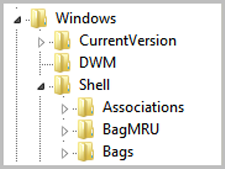
ShellbagsThis is the tenth in a series revisiting Ball in Your Court columns and posts from the primordial past of e-discovery–updating and critiquing in places, and hopefully restarting a few conversations.  As always, your comments are gratefully solicited.

Locard’s Principle

[Originally published in Law Technology News, February 2006]

Devoted viewers of the TV show “CSI” know about Locard’s Exchange Principle: the theory that anyone entering a crime scene leaves something behind or takes something away.  It’s called cross-transference, and though it brings to mind fingerprints, fibers and DNA, it applies to electronic evidence, too.  The personal computer is Grand Central Station for smart phones, thumb drives, MP3 players, CDs, floppies, printers, scanners and a bevy of other gadgets.  Few systems exist in isolation from networks and the Internet.  When these connections are used for monkey business like stealing proprietary data, the electronic evidence left behind or carried away can tell a compelling story. Continue reading →

Share this:

  • Click to email a link to a friend (Opens in new window) Email
  • Click to print (Opens in new window) Print
  • Click to share on X (Opens in new window) X
  • Click to share on Facebook (Opens in new window) Facebook
  • Click to share on LinkedIn (Opens in new window) LinkedIn
Like Loading...

The Path to E-Mail Production IV, Revisited

22 Thursday Jan 2015

Posted by craigball in Computer Forensics, E-Discovery, General Technology Posts

≈ 1 Comment

path of email-4This is the ninth in a series revisiting Ball in Your Court columns and posts from the primordial past of e-discovery–updating and critiquing in places, and hopefully restarting a few conversations.  As always, your comments are gratefully solicited.

The Path to Production: Are We There Yet?

(Part IV of IV)

[Originally published in Law Technology News, January 2006]

The e-mail’s assembled and accessible.  You could begin review immediately, but unless your client has money to burn, there’s more to do before diving in: de-duplication. When Marge e-mails Homer, Bart and Lisa, Homer’s “Reply to All” goes in both Homer’s Sent Items and Inbox folders, and in Marge’s, Bart’s and Lisa’s Inboxes.  Reviewing Homer’s response five times is wasteful and sets the stage for conflicting relevance and privilege decisions.

Duplication problems compound when e-mail is restored from backup tape.  Each tape is a snapshot of e-mail at a moment in time.  Because few users purge mailboxes month-to-month, one month’s snapshot holds nearly the same e-mail as the next.  Restore a year of e-mail from monthly backups, and identical messages multiply like rabbits. Continue reading →

Share this:

  • Click to email a link to a friend (Opens in new window) Email
  • Click to print (Opens in new window) Print
  • Click to share on X (Opens in new window) X
  • Click to share on Facebook (Opens in new window) Facebook
  • Click to share on LinkedIn (Opens in new window) LinkedIn
Like Loading...

The Path to E-Mail Production III, Revisited

21 Wednesday Jan 2015

Posted by craigball in Computer Forensics, E-Discovery, General Technology Posts

≈ 1 Comment

path of email-3This is the eighth in a series revisiting Ball in Your Court columns and posts from the primordial past of e-discovery–updating and critiquing in places, and hopefully restarting a few conversations.  As always, your comments are gratefully solicited.

The Path to Production: Harvest and Population

(Part III of IV)

[Originally published in Law Technology News, December 2005]

On the path to production, we’ve explored e-mail’s back alleys and trod the mean streets of the data preservation warehouse district.  Now, let’s head to the heartland for harvest time.  It’s data harvest time.

After attorney review, data harvest is byte-for-byte the costliest phase of electronic data discovery.  Scouring servers, local hard drives and portable media to gather files and metadata is an undertaking no company wants to repeat because of poor planning.

The Harvest
Harvesting data demands a threshold decision: Do you collect all potentially relevant files, then sift for responsive material, or do you separate the wheat from the chaff in the field, collecting only what reviewers deem responsive?  When a corporate defendant asks employees to segregate responsive e-mail, (or a paralegal goes from machine-to-machine or account-to-account selecting messages), the results are “field filtered.” Today, we’d call this “targeted collection.”

Field filtering holds down cost by reducing the volume for attorney review, but it increases the risk of repeating the collection effort, loss or corruption of evidence and inconsistent selections.  If keyword or concept searches alone are used to field filter data, the risk of under-inclusive production skyrockets.

Initially more expensive, comprehensive harvesting (unfiltered but defined by business unit, locale, custodian, system or medium), saves money when new requests and issues arise.  A comprehensive collection can be searched repeatedly at little incremental expense, and broad preservation serves as a hedge against spoliation sanctions.  Companies embroiled in serial litigation or compliance production benefit most from comprehensive collection strategies.

A trained reviewer “picks up the lingo” as review proceeds, but a requesting party can’t frame effective keyword searches without knowing the argot of the opposition.  Strategically, a producing party requires an opponent to furnish a list of search terms for field filtering and seeks to impose a “one list, one search” restriction.  The party seeking discovery must either accept inadequate production or force the producing party back to the well, possibly at the requesting party’s cost. Continue reading →

Share this:

  • Click to email a link to a friend (Opens in new window) Email
  • Click to print (Opens in new window) Print
  • Click to share on X (Opens in new window) X
  • Click to share on Facebook (Opens in new window) Facebook
  • Click to share on LinkedIn (Opens in new window) LinkedIn
Like Loading...

The Path to E-Mail Production II, Revisited

20 Tuesday Jan 2015

Posted by craigball in E-Discovery

≈ Comments Off on The Path to E-Mail Production II, Revisited

path of email-2This is the seventh in a series revisiting Ball in Your Court columns and posts from the primordial past of e-discovery–updating and critiquing in places, and hopefully restarting a few conversations.  As always, your comments are gratefully solicited.

The Path to Production: Retention Policies That Work

(Part II of IV)

[Originally published in Law Technology News, November 2005]

We continue down the path to production of electronic mail.  Yesterday, I reminded you to look beyond the e-mail server to the many other places e-mail hides.  Now, having identified the evidence, we’re obliged to protect it from deletion, alteration and corruption.

Preservation
Anticipation of a claim is all that’s required to trigger a duty to preserve potentially relevant evidence, including fragile, ever-changing electronic data.  Preservation allows backtracking on the path to production, but fail to preserve evidence and you’ve burned your bridges.

Complicating our preservation effort is the autonomy afforded e-mail users.  They create quirky folder structures, commingle personal and business communications and — most dangerous of all — control deletion and retention of messages.

Best practices dictate that we instruct e-mail custodians to retain potentially relevant messages and that we regularly convey to them sufficient information to assess relevance in a consistent manner.  In real life, hold directives alone are insufficient. Users find it irresistibly easy to delete data, so anticipate human frailty and act to protect evidence from spoliation at the hands of those inclined to destroy it.  Don’t leave the fox guarding the henhouse.

Consider the following as parts of an effective e-mail preservation effort:

  • Litigation hold notices to custodians, including clear, practical and specific retention directives. Notices should remind custodians of relevant places where e-mail resides, but not serve as a blueprint for destruction. Be sure to provide for notification to new hires and collection from departing employees.
  • Suspension of retention policies that call for purging e-mail.
  • Suspension of re-use (rotation) of back up media containing e-mail.
  • Suspension of hardware and software changes which make e-mail inaccessible.
  • Replacing backup systems without retaining the means to read older media.
  • Re-tasking or re-imaging systems for new users.
  • Selling, giving away or otherwise disposing of systems and media.
  • Preventing custodians from deleting/ altering/corrupting e-mail.
  • Immediate and periodic “snapshots” of relevant e-mail accounts.
  • Modifying user privileges settings on local systems and networks.
  • Archival by auto-forwarding selected e-mail traffic to protected storage (i.e., journaling).
  • Restricting activity like moving or copying files tending to irreparably alter file metadata.
  • Packet capture of Instant Messaging (traffic or effective enforcement of IM prohibition.
  • Preserve potential for forensic recovery.
  • Imaging of key hard drives or sequestering systems.
  • Suspension of defragmentation.
  • Barring wiping software and encryption, with audit and enforcement.

Continue reading →

Share this:

  • Click to email a link to a friend (Opens in new window) Email
  • Click to print (Opens in new window) Print
  • Click to share on X (Opens in new window) X
  • Click to share on Facebook (Opens in new window) Facebook
  • Click to share on LinkedIn (Opens in new window) LinkedIn
Like Loading...

The Path to E-Mail Production I, Revisited

19 Monday Jan 2015

Posted by craigball in Computer Forensics, E-Discovery, General Technology Posts

≈ Comments Off on The Path to E-Mail Production I, Revisited

path of emailThis is the sixth in a series revisiting Ball in Your Court columns and posts from the primordial past of e-discovery–updating and critiquing in places, and hopefully restarting a few conversations.  As always, your comments are gratefully solicited.

The Path to E-Mail Production

(Part I of IV)

[Originally published in Law Technology News, October 2005]

Asked, “Is sex dirty,” Woody Allen quipped, “Only if it’s done right.”  That’s electronic discovery: if it’s ridiculously expensive, enormously complicated and everyone’s lost sight of the merits of the case, you’re probably doing it right.

But it doesn’t have to be that way.  Over the next four days, we’ll walk a path to production of e-mail — perhaps the trickiest undertaking in EDD.  The course we take may not be the shortest or easiest, but that’s not the point.  We’re trying to avoid stepping off a cliff.  Not every point is suited to every production effort, but all deserve consideration.

Think Ahead
EDD missteps are painfully expensive, or even unredeemable, if data is lost. Establish expectations at the outset.

Will the data produced:

  • Integrate paper and electronic evidence?
  • Be electronically searchable?
  • Preserve all relevant metadata from the host environment?
  • Be viewable and searchable using a single application, such as a web browser?
  • Lend itself to Bates numbering?
  • Be easily authenticable for admission into evidence?

Meeting these expectations hinges on what you collect along the way through identification, preservation, harvest and population. Continue reading →

Share this:

  • Click to email a link to a friend (Opens in new window) Email
  • Click to print (Opens in new window) Print
  • Click to share on X (Opens in new window) X
  • Click to share on Facebook (Opens in new window) Facebook
  • Click to share on LinkedIn (Opens in new window) LinkedIn
Like Loading...

Don’t Try This at Home, Revisited

16 Friday Jan 2015

Posted by craigball in Computer Forensics, E-Discovery

≈ 4 Comments

mcluhanThis is the fifth in a series revisiting Ball in Your Court columns and posts from the primordial past of e-discovery–updating and critiquing in places, and hopefully restarting a few conversations.  As always, your comments are gratefully solicited.

Don’t Try This at Home

[Originally published in Law Technology News, August 2005]

The legal assistant on the phone asked, “Can you send us copies of their hard drives?”

As court-appointed Special Master, I’d imaged the contents of the defendant’s computers and served as custodian of the data for several months.  The plaintiff’s lawyer had been wise to lock down the data before it disappeared, but like the dog that caught the car, he didn’t know what to do next.  Now, with trial a month away, it was time to start looking at the evidence.

“Not unless the judge orders me to give them to you,” I replied. Continue reading →

Share this:

  • Click to email a link to a friend (Opens in new window) Email
  • Click to print (Opens in new window) Print
  • Click to share on X (Opens in new window) X
  • Click to share on Facebook (Opens in new window) Facebook
  • Click to share on LinkedIn (Opens in new window) LinkedIn
Like Loading...

Give Away your Computer, Revisited

14 Wednesday Jan 2015

Posted by craigball in Computer Forensics, E-Discovery, General Technology Posts

≈ 3 Comments

give awayThis is the fourth in a series revisiting Ball in Your Court columns and posts from the primordial past of e-discovery–updating and critiquing in places, and hopefully restarting a few conversations.  As always, your comments are gratefully solicited.

Give Away Your Computer 

[Originally published in Law Technology News, July 2005]

With the price of powerful computer systems at historic lows, who isn’t tempted to upgrade?  But, what do you do with a system you’ve been using if it’s less than four or five-years old and still has some life left in it?  Pass it on to a friend or family member or donate it to a school or civic organization and you’re ethically obliged to safeguard client data on the hard drive. Plus, you’ll want to protect your personal data from identity thieves and snoopers.  Hopefully you already know that deleting confidential files and even formatting the drive does little to erase your private information—it’s like tearing out the table of contents but leaving the rest of the book.  How do you be a Good Samaritan without jeopardizing client confidences and personal privacy?

Options
One answer: replace the hard drive with a new one before you donate the old machine.  Hard drives have never been cheaper, and adding the old hard drive as extra storage in your new machine ensures easy access to your legacy data.  But, it also means going out-of-pocket and some surgery inside both machines—not everyone’s cup of tea.

Alternatively, you could remove or destroy the old hard drive, but those accepting older computers rarely have the budget to buy hard drives, let alone the technician time to get donated machines running.  Donated systems need to be largely complete and ready to roll.

Probably the best compromise is to wipe the hard drive completely and donate the system recovery disk along with the system.  Notwithstanding some largely theoretical notions, once you overwrite every sector of your hard drive with zeros or random characters, your data is gone forever.  The Department of Defense recommends several passes of different characters, but just a single pass of zeros is enough to frustrate all computer forensic data recovery techniques in common use. Continue reading →

Share this:

  • Click to email a link to a friend (Opens in new window) Email
  • Click to print (Opens in new window) Print
  • Click to share on X (Opens in new window) X
  • Click to share on Facebook (Opens in new window) Facebook
  • Click to share on LinkedIn (Opens in new window) LinkedIn
Like Loading...
← Older posts
Follow Ball in your Court on WordPress.com

Enter your email address to subscribe to this blog and receive notifications of new posts by email.

Join 2,231 other subscribers

Recent Posts

  • A Master Table of Truth November 4, 2025
  • Kaylee Walstad, 1962-2025 August 19, 2025
  • Native or Not? Rethinking Public E-Mail Corpora for E-Discovery (Redux, 2013→2025) August 16, 2025
  • Still on Dial-Up: Why It’s Time to Retire the Enron Email Corpus August 15, 2025
  • Chambers Guidance: Using AI Large Language Models (LLMs) Wisely and Ethically June 19, 2025

Archives

RSS Feed RSS - Posts

CRAIGBALL.COM

Helping lawyers master technology

Categories

EDD Blogroll

  • The Relativity Blog
  • eDiscovery Today (Doug Austin)
  • Complex Discovery (Rob Robinson)
  • Illuminating eDiscovery (Lighthouse)
  • eDiscovery Journal (Greg Buckles)
  • Corporate E-Discovery Blog (Zapproved )
  • E-D Team (Ralph Losey)
  • GLTC (Tom O'Connor)
  • Basics of E-Discovery (Exterro)
  • Sedona Conference
  • CS DISCO Blog
  • E-Discovery Law Alert (Gibbons)
  • Minerva 26 (Kelly Twigger)

Admin

  • Create account
  • Log in
  • Entries feed
  • Comments feed
  • WordPress.com

Enter your email address to follow Ball in Your Court and receive notifications of new posts by email.

Website Powered by WordPress.com.

  • Subscribe Subscribed
    • Ball in your Court
    • Join 2,083 other subscribers
    • Already have a WordPress.com account? Log in now.
    • Ball in your Court
    • Subscribe Subscribed
    • Sign up
    • Log in
    • Report this content
    • View site in Reader
    • Manage subscriptions
    • Collapse this bar
 

Loading Comments...
 

    %d