
 I am fortunate to teach electronic discovery and digital evidence in many venues. There’s the semester-long, 3 credit course at the University of Texas School of Law each Fall, the weeklong Training Academy offered to all comers each June at Georgetown Law School (as part of a splendid faculty) and the 50-70 speeches a year that keep me idling at airports. Next month, I’m adding a sixteen week, eight-session online evening program through the District of Columbia Bar, immodestly titled “Prime Time with Craig Ball.”
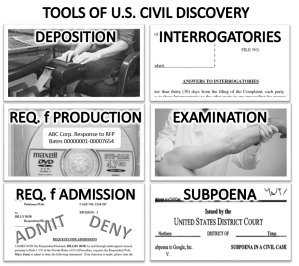
All of these entail accompanying written material, so there is a lot of research and writing for the various courses and presentations. Some of my students aren’t lawyers or are law students with the barest theoretical understanding of discovery. I’ve found it’s never safe to assume that students know the mechanisms of last-century civil discovery, let alone those of modern e-discovery. Accordingly, I penned the following short introduction to discovery in U.S. civil litigation and offer it here in case you need something like it, especially if you’re also teaching this stuff. [It’s copyrighted, but feel free to use it with attribution].
Though I have never known a time without discovery, I found it interesting to reflect on the fact that civil discovery is only about 20 years older than I am; Discovery is nearly a Baby Boomer! On a scale of jurisprudential evolution, we’re both young punks. Need some perspective? The FRCP are exactly the same age as U.S. Supreme Court Justice Stephen Breyer, former Attorney General Janet Reno and Prof. Alan Dershowitz. Continue reading
 It’s said that the difference between men and boys is the price of their toys. True enough. A benefit of adulthood is that, if you’re lucky, you can splurge on stuff you dreamed of as a child. For me, a boyish passion was remote sensing and control. When you’re small and powerless, you feel bigger and empowered to monitor and control things from afar, even if “afar” is just a few feet away. So, before I began fooling with phones and multi frequency switching systems as an adolescent, I was a grade schooler stringing, first real string, then wires and finally transmitters and receivers to turn things on and off and monitor my little world.
 I haven’t posted in ages per the Mr. Ed Rule. For those too young to remember the talking horse of early-60s TV, the theme song says, “Mr. Ed will never speak unless he’s got something to say.” Sorry, Wilbur. I just didn’t have anything to say, and didn’t wish to waste your time. But, now I’ve got something worth writing about, and a gift to share.






 Ball in your Court