• Home
  • About
  • CRAIGBALL.COM
  • Disclaimer
  • Log In

Ball in your Court

~ Musings on e-discovery & forensics.

Ball in your Court

Category Archives: E-Discovery

Putting the Duh in Da Silva Moore

26 Monday Mar 2012

Posted by craigball in E-Discovery

≈ 4 Comments

There’s been a lot of fuss and bother about the Da Silva Moore decision by Judge Andrew Peck, much of it fomenting the notion that a federal magistrate judge (approved) (required)(made mad passionate love to) predictive coding in a case.  I kept my own counsel until now because a judge going along with something the parties had already agreed to do struck me as something less than a jurisprudential watershed.  The question presented to the court was not whether an e-culling tool would be employed but how.  That is, the kids weren’t fighting about whether to play the radio but only about how to set the volume and station.  They took their quarrel to Dad, and now the kid who didn’t get his way is saying Dad played favorites.

The plaintiffs, whose QA and sampling values were rejected, have every right to complain about the metrics.  Where predictive coding is concerned, the devil is very much in the details.  But their pairing of valid concerns with a sleazy personal attack on the judge has to be one of the dumbest moves to come down the e-discovery pike since Creative Pipe named its line of stolen garbage can designs FUVISTA (for F*** yoU VIctor STAnley).  It puts the duh in Da Silva Moore. Continue reading →

Share this:

  • Email a link to a friend (Opens in new window) Email
  • Print (Opens in new window) Print
  • Share on X (Opens in new window) X
  • Share on Facebook (Opens in new window) Facebook
  • Share on LinkedIn (Opens in new window) LinkedIn
Like Loading...

A Generation in Transition

24 Saturday Mar 2012

Posted by craigball in E-Discovery

≈ 7 Comments

We are the transitional generation in terms of the shift from discovery in a world geared to information on paper to one where paper is largely an afterthought.   An airline boarding pass is a screen shot of a bar code, gate, time and seat number.  We print it in case TSA can’t scan our phone, then trash it when we touch down.

Growing up, the organization of information on paper was so ingrained in our education that we take our “paper skills” for granted even as paper has all-but-disappeared.  We learned to color inside the lines.  Put our name and the date at the top of our papers.  Organize alphabetically.  Staple and paper clip.

We learned the structure of a “business letter.”  Date and subject go here, salutation there, and don’t forget the CC: and BCC: addressees at the bottom.

All of it marched more-or-less seamlessly into a common culture of paper records management.  Correspondence flowed into files, folders, drawers, cabinets and file rooms.  Everything had a place, and everything depended upon information being in its place.  That is, everything depended upon organizing information from its creation and all along its path until it found its semi-permanent place in the storage and retrieval system.

As information went digital, we clung to metaphors of records management.  The screen icons remained files, folders and even envelopes.  But while we pretended digital information was still like paper, our culture of records management collapsed.  The fleeting phone call and the enduring business letter and “memo to file” all morphed into e-mail.  Subject lines ceased to reliably describe contents.  File clerks became baristas and file rooms became server rooms.  Everyone was left to their own devices—literally—in terms of information management.  Computerized search, they promised, would do away with all that pesky management of documents.

And, in many ways, the promise was kept.  We draw on vast reservoirs of information using search tools of such instantaneous ingenuity and complexity that we rarely reflect on what transpired for us to find that Chinese restaurant in San Francisco or convert U.S. Dollars to Brazilian Reais at market rates.  We’ve been content to leave it to the geeks.

And there’s the nub of the problem in e-discovery.  As information stopped being like paper records and everything became databases, lawyers were content to leave organization to the geeks.  We can’t imagine a competent lawyer not knowing how to find a document in a file folder or cabinet; yet, oddly, we can’t imagine a lawyer knowing how to fashion a competent ESI search protocol or query a database.  We barely expect lawyers to know what ESI protocols and databases are.  We’ve set the bar too low for the Bar, and clients and judges are suffering as a consequence. Continue reading →


Share this:

  • Email a link to a friend (Opens in new window) Email
  • Print (Opens in new window) Print
  • Share on X (Opens in new window) X
  • Share on Facebook (Opens in new window) Facebook
  • Share on LinkedIn (Opens in new window) LinkedIn
Like Loading...

A Hash of It

05 Monday Mar 2012

Posted by craigball in Computer Forensics, E-Discovery

≈ 19 Comments

Charles Kingsfield of the Paper ChaseI’m teaching e-discovery at the University of Texas Law School this semester, and though it’s been a lot of work, and challenging to conform my peripatetic practice to a fixed routine, I love being back in the classroom with bright students.  So far, I’m pretty sure no one in the class has learned more than I have.

I’ve learned that however witty I imagine I might be in front of a lawyer audience, I’m not funny in the slightest to a bunch of stressed out 2Ls.  And, I’ve discovered that I need fresh technology metaphors because references to pre-1990 devices draw blank stares.  Despite the resurgent coolness of vinyl, twenty-somethings have never heard of a “tone arm” nor experienced an “auto reverse” cassette deck.  Of course, what were you thinking, old timer?!?!

Unlike practicing lawyers, law students don’t devote all their creative ingenuity to fashioning arguments why they can’t (or shouldn’t have to) learn the nuts and bolts of information technology.  I tell the class it will be on the midterm, and they have all the motivation they need to wrap their nimble noggins around sectors and clusters, hashing and hex.  The power to test those you teach is awesome, and may be what’s missing from CLE.  You can bet you’d see better speakers and more attentive listeners if attendees had to pass a test on the material to get their CLE credit.  But I digress. Continue reading →

Share this:

  • Email a link to a friend (Opens in new window) Email
  • Print (Opens in new window) Print
  • Share on X (Opens in new window) X
  • Share on Facebook (Opens in new window) Facebook
  • Share on LinkedIn (Opens in new window) LinkedIn
Like Loading...

A Billion Dollar Fix for Free

22 Wednesday Feb 2012

Posted by craigball in E-Discovery

≈ 3 Comments

There have lately been a boatload of good stories written about Google’s so-called ‘Billion Dollar E-Discovery Blunder.’  Yes, it was a blunder, and, though the damages are dwindling, maybe it will end up costing Google a billion bucks; but, I’m not so sure it’s all that much an e-discovery issue.  That said, I’m going to wind this post up with a suggestion of a simple technique for QA/QC in e-discovery you can use to keep your client or company from the same predicament.

First, the Blunder: Oracle sued Google claiming that Google’s Android smartphone platform infringes Oracle’s Java programming language patents.  With almost $27 billion in revenue and $6 billion in profits, Oracle is #96 on the Fortune 500 list of companies that suck at e-discovery.  Google is #92, with $29 billion in revenues and $8.5 billion in profits.  So, it’s a well-matched, Goliath vs. Goliath fight (and even Goliath is going, “Damn, they’re big and rich”).

Plus, it’s got to be personal for many folks in Silicon Valley.  Redwood City and Mountain View, California are just minutes apart, so you can imagine that when the two Larrys (Oracle’s Ellison and Google’s Page) bump into each other at Fry’s or waiting in line at the DMV, it’s can’t be all guy hugs and fist bumps. Continue reading →

Share this:

  • Email a link to a friend (Opens in new window) Email
  • Print (Opens in new window) Print
  • Share on X (Opens in new window) X
  • Share on Facebook (Opens in new window) Facebook
  • Share on LinkedIn (Opens in new window) LinkedIn
Like Loading...

Box Score: Justice 1, Bullies 0

03 Friday Feb 2012

Posted by craigball in E-Discovery

≈ 2 Comments

The saga of Pippins v. KPMG took another just turn today as Judge Colleen McMahon of the Southern District of New York emphatically sustained Magistrate Judge Cott’s refusal to allow KPMG to destroy thousands of hard drives.  I don’t title this post “Justice 1, Bullies 0” as a slap at KPMG.  Though I thought KPMG’s position anemic and oddly out-of-touch with an expert’s appreciation of user data on hard drives, KPMG isn’t the bully here.  No, the bully in my bullseye was the U.S Chamber of Commerce, which threw its fat wallet into the fray, selfishly attacking Magistrate Cott’s well-reasoned discovery order.  No friend of the court, the Chamber has been buying influence at the statehouse for so long, it must have decided to see what it could peddle down at the courthouse.  Happily, all that lobbyist lucre went right down the drain.  Kudos Judge McMahon! Continue reading →

Share this:

  • Email a link to a friend (Opens in new window) Email
  • Print (Opens in new window) Print
  • Share on X (Opens in new window) X
  • Share on Facebook (Opens in new window) Facebook
  • Share on LinkedIn (Opens in new window) LinkedIn
Like Loading...

Aren’t You Forgetting Something?

26 Thursday Jan 2012

Posted by craigball in Computer Forensics, E-Discovery

≈ Comments Off on Aren’t You Forgetting Something?

I can hardly believe it’s taken this long to get back to blogging.  It’s been a whirlwind of new matters and teaching of late, such that I looked up from my computers to find I’d mislaid January.

This is a short post about two invaluable files often missed when parties consider what to collect and process for discovery.  If you’re not preserving, collecting and processing IPD and OST files, you may be missing some pretty important stuff.  And, if your vendor doesn’t know how to process them, you’re certainly missing something. Continue reading →

Share this:

  • Email a link to a friend (Opens in new window) Email
  • Print (Opens in new window) Print
  • Share on X (Opens in new window) X
  • Share on Facebook (Opens in new window) Facebook
  • Share on LinkedIn (Opens in new window) LinkedIn
Like Loading...

A Bad Night in Havana

27 Tuesday Dec 2011

Posted by craigball in E-Discovery

≈ Comments Off on A Bad Night in Havana

Patel v. Havana Bar (E.D. Pa. Dec. 5, 2011) breaks no new ground in e-discovery, but it makes for interesting reading on several fronts.  First, it’s a prosaic personal injury case brought by a bar patron who suffered a severe fall, either because he was sober and the bar was negligent, or because he was wasted and the bar was negligent.  The plaintiff is uncertain of his sobriety, but he’s positive the bar was negligent.  The plain vanilla context is a reminder that the obligation of e-discovery competence runs to all counsel, even those who handle the bread-and-butter stuff that fills the dockets.  Second, the case presents dueling spoliation claims and bilateral sanctions.  Everyone gets slapped down!  Finally, the e-evidence at issue–FaceBook postings and video imagery–is a welcome respite from the usual squabbling over e-mail, and points up the variety of ESI that must be considered in setting a proper scope of preservation. Continue reading →

Share this:

  • Email a link to a friend (Opens in new window) Email
  • Print (Opens in new window) Print
  • Share on X (Opens in new window) X
  • Share on Facebook (Opens in new window) Facebook
  • Share on LinkedIn (Opens in new window) LinkedIn
Like Loading...

A Big Thanks to Rob Robinson!

19 Monday Dec 2011

Posted by craigball in Computer Forensics, E-Discovery

≈ 2 Comments

One of the pleasures of my practice is staying abreast of what others have to say about e-discovery and computer forensics.  I try not to miss much, though the chorus of voices has grown markedly in the last five years,  The challenge is choosing wisely for the quality of discourse hasn’t kept pace with the volume.  I’m in the debt of vigilant folks like Rob Robinson, a really nice guy who takes the time to run the traps of blogs and publications to insure that many voices worth hearing are heard.

Rob is Vice President of Marketing for e-discovery service provider, Orange Legal Technologies in Salt Lake City, but like your’s truly, Rob’s based in Austin.  Rob publishes his Unfiltered Orange list through all the major networking streams, so if you want Tweet updates, you can follow @OrangeLT.  I prefer the weekly compendiums which can be seen HERE, subscribed to HERE or added as an RSS feed.

Thanks, Rob!  Great work!

Share this:

  • Email a link to a friend (Opens in new window) Email
  • Print (Opens in new window) Print
  • Share on X (Opens in new window) X
  • Share on Facebook (Opens in new window) Facebook
  • Share on LinkedIn (Opens in new window) LinkedIn
Like Loading...

A Brief Compendium of Boneheaded E-Discovery Mistakes

18 Sunday Dec 2011

Posted by craigball in E-Discovery

≈ 17 Comments

Earlier this year, I delivered the keynote address for a corporate event in Canada,  I called the talk, “Spoiled and Deluded: Ugly Truths about Electronic Search.”  I lamented how our happy experience with Google and online legal research has left us woefully unprepared (“spoiled”) for the extreme difficulty of search in e-discovery, then dashed a few misconceptions about the efficacy of searching ESI in accepted ways (“deluded”).  Dear Reader, we need to be brutally frank about search; because in a world where the organization of information has gone the way of the typewriter and file room, effective, efficient search is something we cannot manage without.

Search has two non-exclusive ways to fail: your query will not retrieve the information you seek and your query will retrieve information you weren’t seeking.  The measure of the first is called “recall,” and of the latter, “precision.”  We want what we’re looking for (high recall) and only what we are looking for (high precision).

Recall and Precision aren’t friends.  In e-discovery, they’re barely on speaking terms.  Every time Recall has a tea party, Precision crashes with his biker buddies and breaks the dishes. Continue reading →

Share this:

  • Email a link to a friend (Opens in new window) Email
  • Print (Opens in new window) Print
  • Share on X (Opens in new window) X
  • Share on Facebook (Opens in new window) Facebook
  • Share on LinkedIn (Opens in new window) LinkedIn
Like Loading...

A Fish Story

11 Sunday Dec 2011

Posted by craigball in E-Discovery

≈ 3 Comments

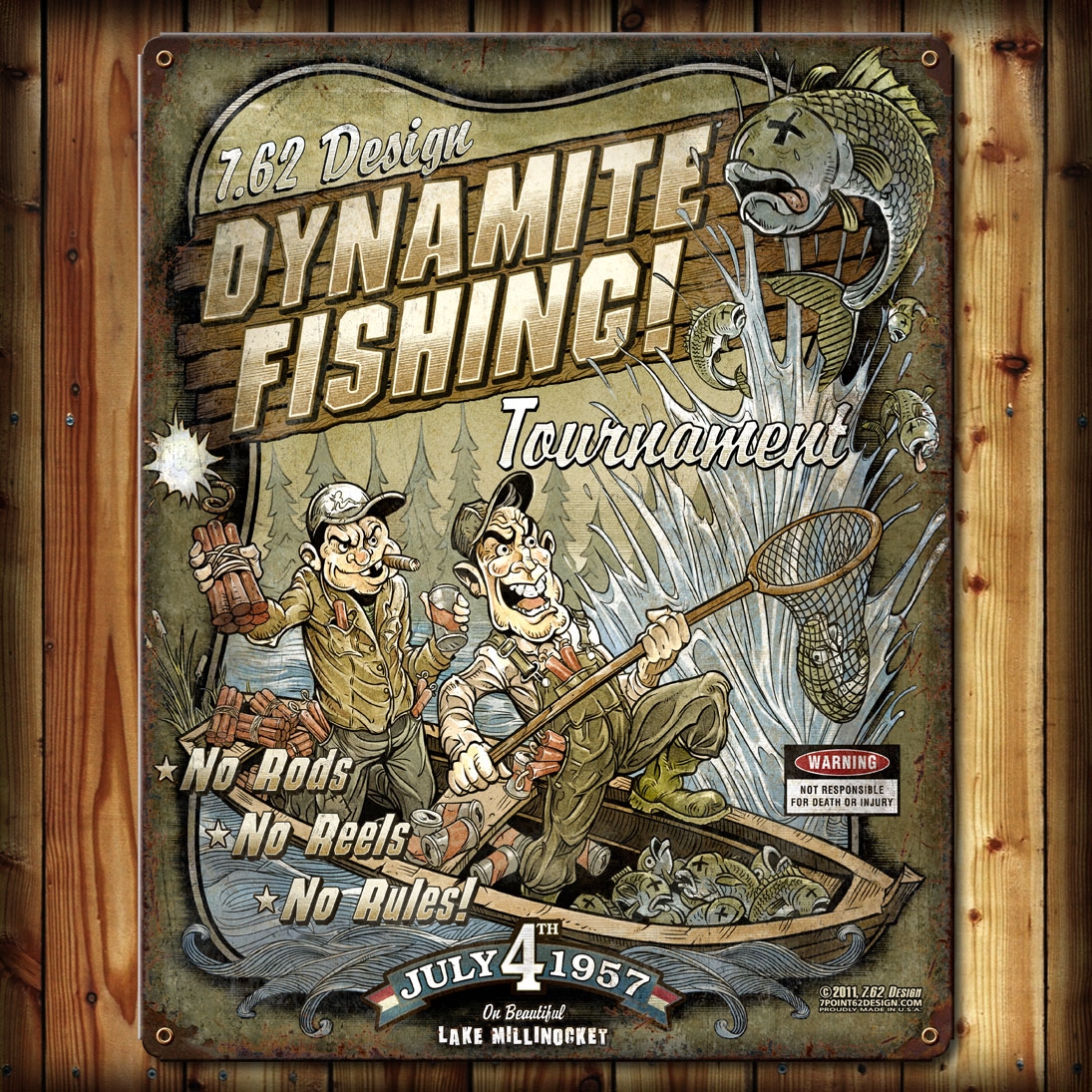
There was an old farmer who always took the trophy in the fishing tournament with the biggest catch.  The new game warden became suspicious and demanded the farmer take him fishing.  In the middle of the lake, the farmer pulls out a stick of dynamite, lights it and throws it into the water.  Boom!  When hundreds of stunned fish float to the surface, the farmer takes out a net and snags the biggest one.  The warden is outraged.  “You can’t do that!” he screams, “Do you know how many laws you’ve broken?”  Calmly, the farmer lights another stick of dynamite, hands it to the game warden and says, “Well boy, you gonna talk or you gonna fish?”

Litigants look to lawyers for guidance in preserving electronic evidence, and lawyers, clueless about information technology, hand them a stick of dynamite and say, “go fish.” Continue reading →

Share this:

  • Email a link to a friend (Opens in new window) Email
  • Print (Opens in new window) Print
  • Share on X (Opens in new window) X
  • Share on Facebook (Opens in new window) Facebook
  • Share on LinkedIn (Opens in new window) LinkedIn
Like Loading...
← Older posts
Newer posts →
Follow Ball in your Court on WordPress.com

Enter your email address to subscribe to this blog and receive notifications of new posts by email.

Join 2,238 other subscribers

Recent Posts

  • Detecting Deep Fakes February 24, 2026
  • A Fun Way to Build AI Fluency February 21, 2026
  • Electronic Evidence Workbook 2026 February 18, 2026
  • The Most Important Thing I’ve Read This Year February 12, 2026
  • 2026 Guide to AI and LLMs in Trial Practice January 9, 2026

Archives

RSS Feed RSS - Posts

CRAIGBALL.COM

Helping lawyers master technology

Categories

EDD Blogroll

  • E-Discovery Law Alert (Gibbons)
  • Minerva 26 (Kelly Twigger)
  • Corporate E-Discovery Blog (Zapproved )
  • Sedona Conference
  • Illuminating eDiscovery (Lighthouse)
  • GLTC (Tom O'Connor)
  • eDiscovery Journal (Greg Buckles)
  • E-D Team (Ralph Losey)
  • Basics of E-Discovery (Exterro)
  • The Relativity Blog
  • Complex Discovery (Rob Robinson)
  • CS DISCO Blog
  • eDiscovery Today (Doug Austin)

Admin

  • Create account
  • Log in
  • Entries feed
  • Comments feed
  • WordPress.com

Enter your email address to follow Ball in Your Court and receive notifications of new posts by email.

Website Powered by WordPress.com.

  • Subscribe Subscribed
    • Ball in your Court
    • Join 2,090 other subscribers
    • Already have a WordPress.com account? Log in now.
    • Ball in your Court
    • Subscribe Subscribed
    • Sign up
    • Log in
    • Report this content
    • View site in Reader
    • Manage subscriptions
    • Collapse this bar
 

Loading Comments...
 

    %d