
 It’s the month for giving thanks, and I’m ever-grateful for the daily e-discovery blog penned by my friend, Doug Austin, for CloudNine. It’s tough to get out a post every business day, and Doug’s done it splendidly for, what, nine years now? Kudos! Doug’s EDiscovery Daily blog is often my first heads-up for new e-discovery cases, true again for the decision he featured this morning, Metlife Inv’rs. USA Ins. Co. v. Lindsey, No. 2:16-CV-97 (N.D. Ind. Oct. 25, 2018)
It’s a familiar scenario. The requesting party expressly demands native file production. The responding party, a big insurance company, produces static image formats as non-searchable PDFs. When the requesting party objects, the carrier argues that the metadata it strips from the evidence isn’t relevant and that the request for native forms is disproportionate, again challenging relevance, and also claiming that producing in the native forms sought would be cumulative because (chutzpah!) they’d already produced in PDF over their opponent’s timely objection.
To its credit, the Court makes short work of MetLife’s high-handedness and orders native production but stumbles a bit on the relevance and scope issues. The Court addresses the relevance objection by noting that native production may shed light on who accessed information and that this may inform whether the insurer had a duty to investigate the policy application. Maybe. More likely, it won’t. But, the Court shouldn’t have let itself be drawn in by a specious relevance challenge.
There are two varieties of file metadata: application metadata and system metadata. Relevance should never matter for application metadata or dog tag system metadata. If a file is sufficiently relevant to be responsive, no requesting party should be required to further demonstrate that metadata within the file is independently relevant. The burden to prove a right to excise parts of relevant files should rest with the party altering the evidence. Moreover, a file’s name, path and last modified date (“dog tag” metadata) are so patently useful that their utility more than relevance should serve as sufficient basis for the production of essential system metadata. Continue reading
 In 1829, Georgia made it a crime to teach slaves to read. Literate slaves threatened the control of their masters. If a slave could read the Bible, a slave could also circulate an inflammatory pamphlet or forge a pass. Literacy was a step to freedom. So, with Georgia on my mind, I ask, Are e-literate requesting parties a threat to th status quo?
 With a heavy heart, I share the report that my delightful friend and colleague Nigel Murray (left) died last night from the brain cancer that has plagued him for two years. Nigel was a soldier, a gentleman and a rascal in the best sense of each. To lift a glass with Nigel at events here and abroad to discuss the state of e-disclosure was always a pleasure.
 The Texan in me can’t hear the phrase “on the road again” without also hearing Willie Nelson’s nasal voice singing it. But, the life I love IS making music with my friends, if by “music” we mean bringing “aha” moments to lawyers and others interested in e-discovery and forensic technology.
 Anyone who’s been around electronic discovery for long is sure to know my old friend, Tom O’Connor of New Orleans. Understand, I don’t call Tom “old friend” because we’ve known each other for a long time (though we have). I do it because Tom’s OLD. He’s freaking ancient. But, the centuries haven’t been entirely wasted on Tom because in addition to a three-foot ponytail and a beard to rival Santa’s, Tom has acquired a surfeit of wisdom and friends. Tom has his finger squarely on the pulse of the e-discovery industry and possesses a refined sense of what’s coming and the personalities pulling strings. People enjoy talking to Tom, and Tom listens. He’s a guy to have on your team; someone who makes things better just by being part of them.
 Does anyone read what they sign anymore? We all click through EULA’s; but shouldn’t lawyers and experts pay close attention to the terms of protective orders?
 Checking the mailbag, I received a great question from a recent Georgetown E-Discovery Training Academy attendee. I’m posting it here in hopes my response may be useful to you.
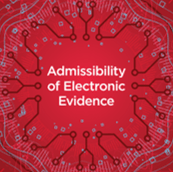 I received a fine gift this morning from U.S. District Judge Paul Grimm, and with the authors’ permission, I’m sharing it with you. It’s a
  Ball in your Court