Free CLE Alert: Computer Forensics for Legal Professionals

There’s always so much great stuff to do in Washington D.C. in the summertime.  If I could be there next Friday evening, July 13, I might (as I did last month) take in the patriotic repertoire of the U.S. Army Band on the west steps of the Capitol or catch the comedic Capitol Steps at the Ronald Reagan Center.  Plus, there’s Cirque de Soleil at the Verizon Center.  But if I were in D.C. next Friday, the event I surely wouldn’t miss would be to hightail it over to the Hilton Washington at 1919 Connecticut Avenue NW from 6:15-7:15PM to hear the DOJ’s incomparable Ovie Carroll talk about Computer Forensics for Legal Professionals in the International Ballroom East. Continue reading

A Bit About Deduplication

The 4th of July is one of my very favorite holidays, second only to Thanksgiving.  We try to do patriotic things like construct kitschy neighborhood parade floats or, as we did at breakfast, stand and sing a rousing rendition of the national anthem, hoping that I can still hit the high notes (I did).  Last night, to get in the mood, I watched the 2008 BBC 6-part series Stephen Fry in America, which follows the wry English entertainer as he races about all fifty U.S. states in his trademark London cab.  In Boston, Fry discussed contradictions in the American character with the late Peter Gomes, a pastor and Harvard professor of divinity who Fry described as “a black, gay, Republican Baptist.”  Gomes observed that, “One of the many things one can say about this country is that we dislike complexity, so we will make simple solutions to everything that we possibly can, even when the complex answer is obviously the correct answer or the more intriguing answer.  We want a simple ‘yes’ or ‘no,’ or a flat out ‘this’ or an absolutely certain ‘that.’”

Gomes wasn’t talking about electronic discovery, but he could have been.

For a profession that revels in convoluted codes and mind-numbing minutiae, lawyers and judges are queerly alarmed at the complexity and numerousity of ESI.  They speak of ESI only in terms that underscore its burden, never extoling its benefits.  They demand simple solutions without looking beyond the (often misleading) big numbers to recognize that the volume they vilify is mostly just the same stuff, replicated over and over again.  It’s a sad truth that much of the time and money expended on e-discovery in the U.S. is wasted on lawyers reviewing duplicates of information that could have been easily, safely and cheaply culled from the collection.  Sadder still, the persons best situated to eradicate this waste are the ones most enriched by it.   Once, I might have said “innocently enriched by it,” but no more.

The oft-overlooked end of discovery is proving a claim or defense in court. So, the great advantage of ESI is its richness and revealing character.  It’s better evidence in the sense of its more-candid content and the multitude of ways it sheds light on attitudes and actions.  Another advantage of ESI is the ease with which it can be disseminated, collected, searched and deduplicated.  This post is about deduplication, and why it might be attorney malpractice not to understand it well and use it routinely. Continue reading

CEIC 2012: From an iPad Aloft

20120520-215126.jpgI’m writing this post from 36,000 feet on my way to Las Vegas for the annual CEIC (Computer Enterprise and Investigations Conference) that begins tomorrow at the Red Rock Resort in Summerlin, NV, ten miles off the Strip. Between my personal Scylla and Charybdis of e-discovery and digital forensics, I attend a ridiculous number of forensic technology conferences each year (merely ridiculous, as I cede “insane” to the Grand Dukes of EDD, the always avuncular Browning Marean and ever erudite Chris Dale). Some, like CEIC and New York LegalTech are big, bustling events in splendid venues that feel more like family reunions than trade shows. Others, like my trek to this Friday’s Appalachian Institute for Digital Evidence in Huntington, West Virginia, are intimate gatherings sized to local law enforcement and student budgets. Big event or small, I’m grateful to be invited to play my part in the educational components of them all.

But I confess that CEIC is one conference that I look forward to more than most. Sure, I love its alternate annual situs in Las Vegas and Orlando; but, the real draw to CEIC is the quality and breadth of its educational offerings and the collegiality of the mixed group of attendees: cops, techies, warriors, lawyers, judges and three-letter agency types (and a few booth babes–it’s Vegas after all). Continue reading

A Bill of Rights for E-Discovery

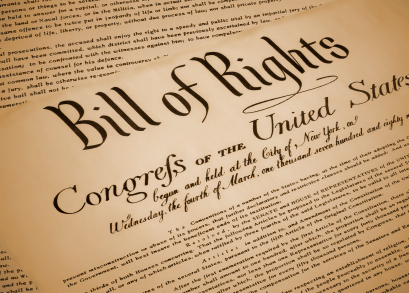
Sometimes you write something that strikes a chord and the hits go off the charts.  That’s a good day.  Other times, you pen something you’re proud of and the silence is deafening.  Two years ago, I wrote a column putting forward a Bill of Rights for E-Discovery that set out expectations and obligations of requesting parties.  As we used to say back in New York, “ya coulda hoid a pin drop.”  Since it fell flat before, you may wonder why I’d trot it out again.  Truth is, I still think it’s the germ of something worthwhile.  Perhaps I missed the mark, but someone needs to hit it; and I keep hoping it might be something like this: Continue reading

Bad Soup: Boiled Frog, Mouse Balls and Lawyer Eyes

Writing an LTN column about boneheaded mistakes, I’m reminded of one of my own.  I use a fancy Lucite mouse pad, swag acquired at some long-ago ABA TechShow from Corel, purveyor of WordPerfect.  It emits a cool blue glow, and incorporates a four port USB hub along its edge.  That pad’s seen many miles of mouse trails, and I like it.  But, it has a solid black tracking surface, polished from years of use and sebaceous exudate.  That was okay when mice used rubber balls to track hand movements (friction cares little for color or reflectivity); but modern mice have eyes.  I didn’t adapt to my seeing eye mouse and   gradually accepted diminished performance as the norm.

That’s the difference between tossing a frog into a pot of boiling water or into one filled with cold water and bringing it to a boil.  They say that he’ll leap from the hot pot but stay in the cold water until he slowly boils to death.  [In fact, froggie will do nothing of the sort.  The boiling water will kill him handily, and he will escape the rising temps, if he can.  But, let’s not let facts spoil a good metaphor].

My mouse pad is a metaphor, too: for the problems I accept in Word despite years of using the program, for the demise of Corel and WordPerfect and for the biggest hurdle lawyers face in e-discovery.  Continue reading

Putting the Duh in Da Silva Moore

There’s been a lot of fuss and bother about the Da Silva Moore decision by Judge Andrew Peck, much of it fomenting the notion that a federal magistrate judge (approved) (required)(made mad passionate love to) predictive coding in a case.  I kept my own counsel until now because a judge going along with something the parties had already agreed to do struck me as something less than a jurisprudential watershed.  The question presented to the court was not whether an e-culling tool would be employed but how.  That is, the kids weren’t fighting about whether to play the radio but only about how to set the volume and station.  They took their quarrel to Dad, and now the kid who didn’t get his way is saying Dad played favorites.

The plaintiffs, whose QA and sampling values were rejected, have every right to complain about the metrics.  Where predictive coding is concerned, the devil is very much in the details.  But their pairing of valid concerns with a sleazy personal attack on the judge has to be one of the dumbest moves to come down the e-discovery pike since Creative Pipe named its line of stolen garbage can designs FUVISTA (for F*** yoU VIctor STAnley).  It puts the duh in Da Silva Moore. Continue reading

A Generation in Transition

We are the transitional generation in terms of the shift from discovery in a world geared to information on paper to one where paper is largely an afterthought.   An airline boarding pass is a screen shot of a bar code, gate, time and seat number.  We print it in case TSA can’t scan our phone, then trash it when we touch down.

Growing up, the organization of information on paper was so ingrained in our education that we take our “paper skills” for granted even as paper has all-but-disappeared.  We learned to color inside the lines.  Put our name and the date at the top of our papers.  Organize alphabetically.  Staple and paper clip.

We learned the structure of a “business letter.”  Date and subject go here, salutation there, and don’t forget the CC: and BCC: addressees at the bottom.

All of it marched more-or-less seamlessly into a common culture of paper records management.  Correspondence flowed into files, folders, drawers, cabinets and file rooms.  Everything had a place, and everything depended upon information being in its place.  That is, everything depended upon organizing information from its creation and all along its path until it found its semi-permanent place in the storage and retrieval system.

As information went digital, we clung to metaphors of records management.  The screen icons remained files, folders and even envelopes.  But while we pretended digital information was still like paper, our culture of records management collapsed.  The fleeting phone call and the enduring business letter and “memo to file” all morphed into e-mail.  Subject lines ceased to reliably describe contents.  File clerks became baristas and file rooms became server rooms.  Everyone was left to their own devices—literally—in terms of information management.  Computerized search, they promised, would do away with all that pesky management of documents.

And, in many ways, the promise was kept.  We draw on vast reservoirs of information using search tools of such instantaneous ingenuity and complexity that we rarely reflect on what transpired for us to find that Chinese restaurant in San Francisco or convert U.S. Dollars to Brazilian Reais at market rates.  We’ve been content to leave it to the geeks.

And there’s the nub of the problem in e-discovery.  As information stopped being like paper records and everything became databases, lawyers were content to leave organization to the geeks.  We can’t imagine a competent lawyer not knowing how to find a document in a file folder or cabinet; yet, oddly, we can’t imagine a lawyer knowing how to fashion a competent ESI search protocol or query a database.  We barely expect lawyers to know what ESI protocols and databases are.  We’ve set the bar too low for the Bar, and clients and judges are suffering as a consequence. Continue reading

Blame It on Rio

I’m sorry that I’ve been slow to post, but I spent Spring Break in South America, enjoying spirited Rio de Janeiro, breathtaking Iguazu Falls, sprawling Sao Paulo and cosmopolitan Buenos Aires (along with some forgettable forays along the Uruguayan coast). Between enjoying Jobim on Ipanema Beach and biking to Evita’s crypt, I forgot to think about e-discovery.

South America is friendly, affordable and delicious. If you haven’t made it down there, GO! Brazilians are warm and ebullient, Rio is strikingly lovely and Buenos Aires almost out-Parises Paris for grand boulevards, lovely parks and public statuary.  You haven’t experienced the joy of carnivorousness until you’ve eaten beef at Porcao in Rio.  Obregado Brazil and gracias Argentina!

A Hash of It

Charles Kingsfield of the Paper ChaseI’m teaching e-discovery at the University of Texas Law School this semester, and though it’s been a lot of work, and challenging to conform my peripatetic practice to a fixed routine, I love being back in the classroom with bright students.  So far, I’m pretty sure no one in the class has learned more than I have.

I’ve learned that however witty I imagine I might be in front of a lawyer audience, I’m not funny in the slightest to a bunch of stressed out 2Ls.  And, I’ve discovered that I need fresh technology metaphors because references to pre-1990 devices draw blank stares.  Despite the resurgent coolness of vinyl, twenty-somethings have never heard of a “tone arm” nor experienced an “auto reverse” cassette deck.  Of course, what were you thinking, old timer?!?!

Unlike practicing lawyers, law students don’t devote all their creative ingenuity to fashioning arguments why they can’t (or shouldn’t have to) learn the nuts and bolts of information technology.  I tell the class it will be on the midterm, and they have all the motivation they need to wrap their nimble noggins around sectors and clusters, hashing and hex.  The power to test those you teach is awesome, and may be what’s missing from CLE.  You can bet you’d see better speakers and more attentive listeners if attendees had to pass a test on the material to get their CLE credit.  But I digress. Continue reading

Thoughtful Guidelines for E-Discovery in Criminal Cases

In case you’re wondering if there remains any corner of the litigation world where lawyers can find shelter from all of this e-discovery stuff, one more such Eden has evaporated.  The United States Department of Justice just released its Recommendations for ESI Discovery in Criminal Cases, and, somewhat surprisingly, they are thoughtful, comprehensive and impressive. “Surprisingly” because, apart from meeting Brady obligations, I think most lawyers regard criminal law as an area where there is no discovery, let alone this new-fangled e-discovery.   It’s inspiring to see leaders in the criminal justice arena leading in such a forward thinking and clear-eyed fashion.

If, reading the guidelines, you conclude that these responsibilities won’t devolve upon lawyers, let me assure you that the support resources available to DOJ prosecutors are far more limited than you might expect (or that, for obvious reasons, Justice wants the public to recognize), and such resources wane as you move to the state and local criminal justice systems.  Moreover, it takes two to e-tango, such that public defenders and the criminal defense bar must be conversant in these matters to negotiate protocols and undertake competent reviews of the ESI supplied.

So, once more, e-discovery competence matters.  There is a crisis of competence in the bar where electronic evidence is concerned.  Any lawyer who tells you that you don’t need to know this stuff is kidding themselves.  It’s like suggesting you don’t need to know how to drive because you can always hire a chauffeur.  USDOJ_Intro_Recommendations_ESI_Discovery