
 Each September for the last four years, I’ve had the pleasure to participate in a splendid e-discovery conference in Portland, Oregon called PREX, so-called because the whole event is devoted to PReservation EXcellence. It’s sponsored by Zapproved, but unlike other developer events, it’s less a celebration of self than a product-neutral effort to promote better practices in mounting a defensible enterprise legal hold. A bevy of prominent judges and thought leaders turn out to speak; but, the real star of PREX is Portland itself, resplendent in those precious, late-Summer weeks when one can count on abundant sunshine. If you’re looking for fine, fun education in excellent company, pencil PREX in for September 13-14, 2017. There’s no better time to visit Oregon, and no better event on the topic.
One of the panels this year was “The Perfect Preservation Notice.” I suspect I was asked to join because I’d written a widely-circulated paper many years ago called, “The Perfect Preservation Letter,” wherein I explored the desirable elements of the letter one should send to an opponent affording notice of ESI sought preserved in anticipation of electronic discovery. My title was tongue-in-cheek, as there’s no such thing as a perfect “form” preservation letter, a point I made as counterpoint to composer Steve Goodman’s claim to have written the perfect country and western song by virtue of the lyric,
“I was drunk the day my mom got out of prison
And I went to pick’er up in the rain.
But before I could get to the station in my pickup truck,
She got runned over by a damned ol’ train.”
Song: “You Never Even Called Me by My Name“
My message was that, though perfect isn’t the standard, neither is lousy. We can approach perfect by a modicum of thought and incorporating a few essential elements. Continue reading
 In my law practice, I use PowerPoint more frequently than Word. Word processing tools are for preparing documents for people to read and understand; I use presentation tools like PowerPoint when I want people to see and understand. PowerPoint isn’t a word processor; it’s a visual presentation tool. You can fill slides with text as you might a word-processed document, but when you do that, you’re killing the power of PowerPoint.
 I’ve just returned from a quick trip to San Juan, Puerto Rico. I travelled there to deliver a three-hour presentation on e-discovery as part of a day of education commemorating the 50th anniversary of Article III federal courts on the island. It’s a trip that’s been in the works for some time, and an event about which I was more than usually anxious and discreet. Part of my anxiety stemmed from three hours being a LOOOONG time for an audience to listen to one voice, especially when the topic is somewhat esoteric and technical. My time slot was the three hour block smack in the middle of the day. Too, there were more than 500 people in attendance, and I wanted it to be the performance of a lifetime.

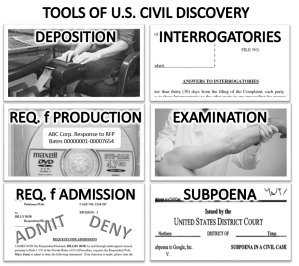 I am fortunate to teach electronic discovery and digital evidence in many venues. There’s the semester-long,
  It’s said that the difference between men and boys is the price of their toys. True enough. A benefit of adulthood is that, if you’re lucky, you can splurge on stuff you dreamed of as a child. For me, a boyish passion was remote sensing and control. When you’re small and powerless, you feel bigger and empowered to monitor and control things from afar, even if “afar” is just a few feet away. So, before I began fooling with phones and multi frequency switching systems as an adolescent, I was a grade schooler stringing, first real string, then wires and finally transmitters and receivers to turn things on and off and monitor my little world.
 I haven’t posted in ages per the Mr. Ed Rule. For those too young to remember the talking horse of early-60s TV, the theme song says, “Mr. Ed will never speak unless he’s got something to say.” Sorry, Wilbur. I just didn’t have anything to say, and didn’t wish to waste your time. But, now I’ve got something worth writing about, and a gift to share.
 Ball in your Court