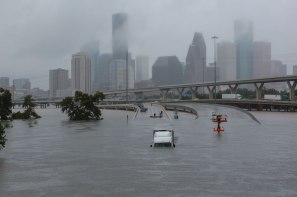
 Houston is my hometown. I wasn’t born there (though both my children were); but, I got there as quickly as I could, at age 17 to study at Rice University. I practiced law in Houston and kept a home in the Houston area for 38 years, longer by far than anywhere else. I have deep Texas roots, proud Houston roots. So, it pains me to see what’s happening in Harris County, and as a past President of the Houston Trial Lawyers Asociation, I’m thinking of all my colleagues whose offices are submerged or inaccessible and whose practices will be devastated and disrupted by Hurricane Harvey.
Right now, the needs are basic: shelter, food, clothing, medical care and such. Soon, however, we must restore the legal and business infrastructure. Though Houston is home to several megafirms, the majority of Houston lawyers–the best lawyers in the world–are small firm- and solo practitioners. It’s these lawyers who will help people pick up the pieces of their lives by prosecuting claims for storm damage when insurers decline to pay what’s owed. In Texas, the need is dire as the toadying Texas Legislature serves at the pleasure of big national insurance carriers, a fact borne out by legislation that, even before Harvey’s waters recede, will operate to deprive Texas insureds of substantial rights to recover for storm losses, effective September 1. Ironic. Tragic. Despicable.
So, we must pull together to help Gulf Coast lawyers recover from the storm. My friend, Tom O’Connor, unselfishly organized a relief effort for Louisiana lawyers when Katrina crippled New Orleans and environs. I’m proud to have contributed in a small way to that effort, financially and by speaking in New Orleans about tech tools to help lawyers cope. I look forward to the chance to work with Tom and with The Computer and Technology Section of the State Bar of Texas to do the same for Gulf Coast lawyers.
There is so much to do, and we must each do what we can according to our particular ways and means. Helping Texas lawyers harness technology to weather the storm is something I can do, and I know it’s within the capability of many of my readers. Houston needs help, and Houston deserves it. After Hurricane Katrina, Houston took in a quarter of a million evacuees, some forty thousand of them stayed. When I was at Rice, Houston welcomed 200,000 Vietnamese refugees. No city is more diverse. None more self-reliant and can-do. No city has a bigger heart.
There are a lot of sodden computers and hard drives in Houston and all along the Gulf Coast. Where once we grabbed the family photo album in an evacuation, today, cherished photos (and crucial client data) is all digital. To that end, I offer this link to a post I wrote after Katrina addressing data recovery. We have come a long way since since August 2005. The Cloud and mobile devices play a big role in data storage, and many hard drives are now solid state; still, the majority of computers rely on mechanical hard drives for long term storage, and water plays havoc with mechanical hard drives. What you do with a damaged device in the aftermath makes a huge difference in whether the data they contain can be resurrected.
Please help Houston, and Houston lawyers, get back on their feet. Believe me, Houstonians would be there for you. They’ve proved it many times before.
 Checking the mailbag, I received a great question from a recent Georgetown E-Discovery Training Academy attendee. I’m posting it here in hopes my response may be useful to you.
 Two years ago, I
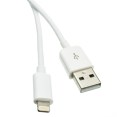 This article makes the case for routine, scalable preservation of potentially-relevant iPhone and iPad data by requiring custodians back up their devices using iTunes (a free Apple program that runs on PCs and Macs), then compress the backup for in situ preservation or collection.
![mobile-device-security[1]](https://craigball.net/wp-content/uploads/2017/04/mobile-device-security1.jpg?w=222&h=174) Can anyone doubt the changes wrought by the modern “smart” cellphone? My new home sits at the corner of one-way streets in New Orleans, my porch a few feet from motorists. At my former NOLA home, my porch faced cars stopped for a street light. From my vantage points, I saw drivers looking at their phones, some so engrossed they failed to move when they could. Phones impact how traffic progresses through controlled intersections in every community. We are slow-moving zombies in cars.
Can anyone doubt the changes wrought by the modern “smart” cellphone? My new home sits at the corner of one-way streets in New Orleans, my porch a few feet from motorists. At my former NOLA home, my porch faced cars stopped for a street light. From my vantage points, I saw drivers looking at their phones, some so engrossed they failed to move when they could. Phones impact how traffic progresses through controlled intersections in every community. We are slow-moving zombies in cars. Two characteristics that distinguish successful trial lawyers are preparation and strategy.
 In the wee hours last evening, I received a question posed by Angela Bunting with Nuix down in Sydney, Australia. Angela has such deep knowledge of e-discovery above and below the Equator that I was flattered to be queried by someone I’d go to for guidance. It was a magnificent hypothetical question.
 Ball in your Court