
 In the wee hours last evening, I received a question posed by Angela Bunting with Nuix down in Sydney, Australia. Angela has such deep knowledge of e-discovery above and below the Equator that I was flattered to be queried by someone I’d go to for guidance. It was a magnificent hypothetical question.
Angela posited a scenario where a producing party used emerging technolgies to either mechanically translate foreign language text to English or voice recordings to text. In each instance, the quality of the resultant searchable text was poor, akin to bad OCR, and characterized by poor searchability due to malformed and missing words, misleading substitutions, etc. As a consequence of this poor searchability, some documents that should have been produced were not and, to make matters worse, the requesting party had some of the omitted documents, so could readily demonstrate serious flaws in production.
Challenged by the requesting party, the producing party defends the use of the automated transcription or translation based on proportionality. To do the same work any other way would have required use of costly and time-consuming manual labor.
So, there you have it: the automated approach was faster and cheaper, but also much less accurate and complete, resulting in a failure to produce non-privileged responsive material.
Angela asked what I believed the view of the courts might be in such a situation? Would the Court require the work be done again using a more accurate, more expensive method? Might sanctions issue? Would the Court excuse the failure based on proportionality?
Predicting what courts will do based on skeletal hypotheticals is a crap shoot. Outcomes turn on the peculiar facts of each case and, when the issue is e-discovery, on counsels’ skill in acquainting the judge with the technical underpinnings.
But, I gave it a shot, and here’s my reply:

 In my law practice, I use PowerPoint more frequently than Word. Word processing tools are for preparing documents for people to read and understand; I use presentation tools like PowerPoint when I want people to see and understand. PowerPoint isn’t a word processor; it’s a visual presentation tool. You can fill slides with text as you might a word-processed document, but when you do that, you’re killing the power of PowerPoint.
 I’ve just returned from a quick trip to San Juan, Puerto Rico. I travelled there to deliver a three-hour presentation on e-discovery as part of a day of education commemorating the 50th anniversary of Article III federal courts on the island. It’s a trip that’s been in the works for some time, and an event about which I was more than usually anxious and discreet. Part of my anxiety stemmed from three hours being a LOOOONG time for an audience to listen to one voice, especially when the topic is somewhat esoteric and technical. My time slot was the three hour block smack in the middle of the day. Too, there were more than 500 people in attendance, and I wanted it to be the performance of a lifetime.

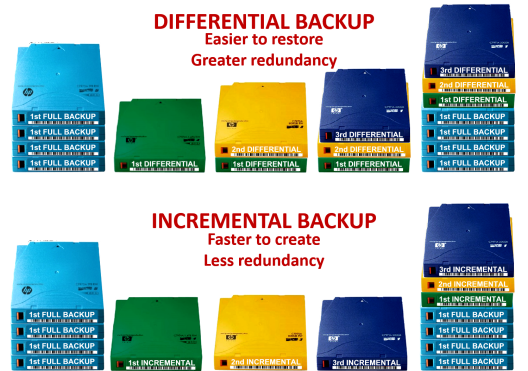
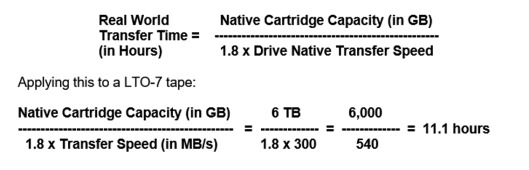
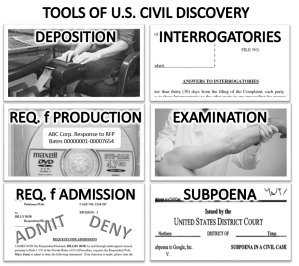 I am fortunate to teach electronic discovery and digital evidence in many venues. There’s the semester-long,
  It’s said that the difference between men and boys is the price of their toys. True enough. A benefit of adulthood is that, if you’re lucky, you can splurge on stuff you dreamed of as a child. For me, a boyish passion was remote sensing and control. When you’re small and powerless, you feel bigger and empowered to monitor and control things from afar, even if “afar” is just a few feet away. So, before I began fooling with phones and multi frequency switching systems as an adolescent, I was a grade schooler stringing, first real string, then wires and finally transmitters and receivers to turn things on and off and monitor my little world.
 Ball in your Court