• Home
  • About
  • CRAIGBALL.COM
  • Disclaimer
  • Log In

Ball in your Court

~ Musings on e-discovery & forensics.

Ball in your Court

Category Archives: Personal

Kaylee Walstad, 1962-2025

19 Tuesday Aug 2025

Posted by craigball in E-Discovery, Personal

≈ 28 Comments

Tags

family, life, love

Writing through tears, I am heartbroken to share that Kaylee Walstad has died suddenly and unexpectedly.

Kaylee was the loving, nurturing mom of our e-discovery community; our tireless cheerleader, stalwart friend, and steady heart. She showed up for everyone—eager to listen, to soothe, to lift burdens from others’ shoulders. She was generosity and kindness incarnate. Wise and warm, radiant and real, she was simply one of a kind.

For years, I’ve begun each day with Kaylee and her EDRM partner and compadre, Mary Mack. Weekdays, weekends, holidays—every morning began with Wordle and a few encouraging words from Kaylee. That small ritual became my daily “proof of life.” In the truest sense, the sun rose with Kaylee Walstad’s light.

Every Tuesday for five years, she was there for the EDRM community support call. And every time, despite her own challenges, Kaylee devoted herself to lifting the spirits of others. She cared, genuinely and deeply, radiating love the way a flame radiates heat. If you knew Kaylee, you know exactly what I mean. If you didn’t, I am sorry—because to know her was to feel lighter, better, more hopeful. She was “Minnesota Nice” to the bone.

Beyond our community, Kaylee was devoted to her two children and her sister. Weekends and holidays were joyous festivals of food, laughter, and family. She poured herself into them, and their triumphs were hers. I cannot begin to fathom the depth of their loss.

We will honor Kaylee’s professional achievements in due time, but right now my heart insists on pouring out love and admiration for the glorious woman who has left us so abruptly, and left us all immeasurably better for having known her.

In the words of poet Thomas Campbell: “To live in hearts we leave behind is not to die.” Kaylee lives on in the hearts of all she lifted, encouraged, and loved.

Gregory Bufithis, one of Kaylee’s legions of admirers, shared a version of these comforting words:

Do not stand by my grave, and weep.
I am not there, I do not sleep.
I am the thousand winds that blow
I am the diamond glints in snow
I am the sunlight on ripened grain,
I am the gentle, autumn rain.
As you awake with morning’s hush,
I am the swift, up-flinging rush
Of quiet birds in circling flight,
I am the day transcending night.

Do not stand by my grave, and cry—
I am not there, I did not die.

— Clare Harner, Topeka, Kansas, December 1934

Share this:

  • Click to email a link to a friend (Opens in new window) Email
  • Click to print (Opens in new window) Print
  • Click to share on X (Opens in new window) X
  • Click to share on Facebook (Opens in new window) Facebook
  • Click to share on LinkedIn (Opens in new window) LinkedIn
Like Loading...

Safety First: A Fun Day at the “Office”

16 Monday Dec 2024

Posted by craigball in Computer Forensics, E-Discovery, General Technology Posts, Personal

≈ 4 Comments

Tags

bosiet, caebs, drill-ship, forensics, offshore, vdr, voyage-data-recorder

As a forensic examiner, I’ve gathered data in locales ranging from vast, freezing data centers to the world’s largest classic car collection. Yet, wherever work has taken me, I’ve not needed special equipment or certifications beyond my forensic skills and tools.  That is, until I was engaged to inspect and acquire a Voyage Data Recorder aboard a drilling vessel operating in the Gulf of Mexico.

A Voyage Data Recorder (VDR) is the marine counterpart of the Black Box event recorder in an airliner.  It’s a computer like any other, but hardened and specialized.  Components are designed to survive a catastrophic event and tell the story of what transpired.

Going offshore by helicopter to a rig or vessel demands more than a willingness to go.  The vessel operator required that I have a BOSIET with CAEBS certification to come aboard.  That stands for Basic Offshore Safety Induction Emergency Training with Compressed Air Emergency Breathing System.  It’s sixteen hours of training, half online and half onsite and hands on.  I suppose I was expected to balk, but I completed the course in Houston on Thursday.  Now, I’m the only BOSIET with CAEBS-certified lawyer forensic examiner I know (for all the good that’s likely to do me beyond this one engagement).  Still, it was a blast to train in a different discipline.

A BOSIET with CAEBS certification encompasses four units:

  1. Safety Induction
  2. Helicopter Safety and Escape Training (with CA-EBS) using a Modular Egress Training Simulator (METS)
  3. Sea Survival including Evacuation, TEMSPC, and Emergency First Aid
  4. Firefighting and Self Rescue Techniques
Continue reading →

Share this:

  • Click to email a link to a friend (Opens in new window) Email
  • Click to print (Opens in new window) Print
  • Click to share on X (Opens in new window) X
  • Click to share on Facebook (Opens in new window) Facebook
  • Click to share on LinkedIn (Opens in new window) LinkedIn
Like Loading...

Surviving a Registration Bomb Attack

02 Friday Feb 2024

Posted by craigball in Computer Forensics, E-Discovery, General Technology Posts, Personal

≈ 1 Comment

Tags

cyber-security, cybercrime, cybersecurity, phishing, security

It started just after 7:00 last night.  My mailbox swelled with messages confirming I’d subscribed to websites and newsletters around the world.  Within an hour, I’d received over 2,000 such messages, and they kept pouring in until I’d gotten 4,000 registration confirmations by 11:00pm. After that, the flood slowed to a trickle.

I was the victim of a registration bomb attack, a scary experience if you don’t grasp what’s happening or know how to protect yourself.  Fortunately, it wasn’t my first rodeo. 

During a similar attack a couple of years ago, I was like a dog on the Fourth of July–I didn’t know what was happening or how to deal with it.  But this time, my nerves weren’t wracked: I knew what was afoot and where the peril lay.

Cybersecurity is not my principal field of practice, but it’s a forensics-adjacent discipline and one where I try to keep abreast of developments.  So, much like a trial lawyer enjoying the rare chance to serve on a jury, being the target of a cyberattack is as instructive as inconvenient.  

While a registration bomb attack could be the work of a disgruntled reader (Hey! You can’t please everybody), more often they serve to mask attacks on legitimate accounts by burying notices of password resets, funds transfers or fraudulent credit card charges beneath a mountain of messages.  So, yes, you should treat a registration bomb attack as requiring immediate vigilance in terms of your finances.  Keep a weather eye out for small transfers, especially deposits into a bank account as these signal efforts to link your account to another as prelude to theft.  Likewise, look at your credit card transactions to ensure that recent charges are legitimate.  Finally—and the hardest to do amidst a deluge of registration notices—look for efforts to change credentials for e-commerce websites you use like Walmart.com or Amazon.com.

A registration bomb attack is a powerful reminder of the value of always deploying multifactor authentication (MFA) to protect your banking, brokerage and credit card accounts.  Those extra seconds expended on secure logins will spare you hours and days lost to a breach.  With MFA in place, an attacker who succeeds in changing your credentials won’t have the access codes texted to your phone, thwarting efforts to rob you.

The good news is that, if you’re vigilant in the hours a registration bomb is exploding in your email account and you have MFA protecting your accounts, you’re in good shape.

Now for the bad news: a registration bomb is a distributed attack, meaning that it uses a botnet to enlist a legion of unwitting, innocent participants—genuine websites—to do the dirty work of clogging your email account with registration confirmation requests.  Because the websites emailing you are legitimate, there’s nothing about their email to trigger a spam filter until YOU label the message as spam. Unfortunately, that’s what you must do: select the attack messages and label each one as spam.  Don’t bother to unsubscribe to the registrations; just label the messages as spam as quickly as you can. 

This is a pain. And you must be attuned to the potential to mistakenly blacklist senders whose messages you want at the same time you’re squashing the spam messages you don’t want and scanning for password change notices from your banks, brokers and e-commerce vendors.  It’s easier when you know how to select multiple messages before hitting the “spam” button (in Gmail, holding down the Shift key enables you to select a range of messages by selecting the first and last message in the range).  Happily, the onslaught of registration spam will stop; thousands become hundreds and hundreds become dozens in just hours (though you’ll likely get stragglers for days).

Registration bombing attacks will continue so long as the web is built around websites sending registration confirmation messages—a process ironically designed to protect you from spam.   If you’ve deployed the essential mechanisms to protect yourself online, particularly strong, unique passwords, multifactor authentication and diligent review of accounts for fraudulent transactions, don’t panic; the registration bomb will be no more than a short-lived inconvenience.  This, too, shall pass.

Share this:

  • Click to email a link to a friend (Opens in new window) Email
  • Click to print (Opens in new window) Print
  • Click to share on X (Opens in new window) X
  • Click to share on Facebook (Opens in new window) Facebook
  • Click to share on LinkedIn (Opens in new window) LinkedIn
Like Loading...

Monica Bay, 1949-2023

30 Monday Oct 2023

Posted by craigball in Computer Forensics, E-Discovery, General Technology Posts, Personal, Uncategorized

≈ 11 Comments

I’m saddened to share that Monica Bay, the forceful, revered former editor of Law Technology News (now Legaltech News) has died after a long, debilitating illness.  Though a durable resident of New York City and Connecticut, Monica’s life ended in California where it began.  Monica described herself as a “provocateur,” an apt descriptor from one gifted in finding the bon mot.  Monica was a journalist with soaring standards whose writing exemplified the high caliber of work she expected from her writers.  I cannot overstate Monica’s importance to the law technology community in her 17 years at the helm of LTN.  Monica mentored multitudes and by sheer force of her considerable strength and will, Monica transformed LTN from an industry organ purveying press releases to an award-winning journal unafraid to speak truth to power.

In her time as editor, Monica was everywhere and indefatigable.  Monica was my editor for much of her tenure at LTN including nine years where I contributed a monthly column she dubbed “Ball in Your Court” (see what I mean about her mastery of the well-turned phrase?)  We had a complicated relationship and butted heads often, but my submissions were always better for Monica’s merciless blue pencil.  I owe her an irredeemable debt.  She pushed me to the fore.  You wouldn’t be reading this now if it weren’t for Monica Bay’s efforts to elevate me.  The outsize recognition and writing awards I garnered weren’t my doing but Monica’s.  If life were a movie, Monica would be the influential publisher who tells the writer plucked from obscurity, “I made you and I can break you!” And it would be true.

This elegy would have been far better if she’d edited it.

Trying to illuminate Monica, I turned to Gmail to refresh my memory but backed off when I saw we’d shared more than 2,200 conversations since 2005.  I’d forgotten how she once loomed so large in my life.  In some of those exchanges, Monica generously called me, “hands down my best writer,” but I wouldn’t be surprised if she said that to everyone in her stable of “campers.”  Monica knew how to motivate, cajole and stroke the egos of her contributors. She was insightful about ego, too.

In 2010 when I carped that there’s always too much to do, and always somebody unhappy with me, she counseled, “Like me, you are an intense personality, and we can be difficult to live with at times. but that intensity and drive is also what makes you who you are, why you are successful, and why you are a breathtakingly good writer.  My favorite people in the world are ‘difficult.’”

I wince as I write that last paragraph because as much as she was brilliant in managing egos, Monica didn’t love that part of her work. She confided, “I think we have to be mindful that we don’t exercise our egos in a way that constrains — or worse case, cripples — those around us. That’s the hard part.”

Monica observed of a well-known commentator of the era, “he wouldn’t be able to write if he had to excise ‘I’ from his vocabulary… he annoys me more than the Red Sox or Jacobs Fields gnats.” 

That reminds me that Monica had a personal blog called “The Common Scold.”  She named it for a Puritan-era cause of action where opinionated women were punished by a dunk in a pond.  I mostly remember it for its focus on New York Yankees baseball, which became a passion for Monica when she moved east despite a lifelong disinterest in sports.  Monica, who insofar as I knew, never married, often referred to herself in the Scold as “Mrs. Derek Jeter.”  She was quirky that way and had a few quirky rules for writers.  One was that the word “solution” was banned, BANNED, in LTN.

To her credit, Monica Bay wasn’t afraid to nip at the hand that feeds.  Now, when every outlet has bent to the will of advertisers, Monica’s strict journalistic standards feel at once quaint and noble. Consider this excerpt from her 2009 Editorial Guidelines:

“Plain English: Law Technology News is committed to presenting information in a manner that is easily accessible to our readers. We avoid industry acronyms, jargon, and clichés, because we believe this language obfuscates rather than enhances understanding.

For example, the word “solution” has become meaningless and is banned from LTN unless it’s part of the name of a company.  Other words we edit out: revolutionary, deploy, mission critical, enterprise, strategic, robust, implement, seamless, initiative, -centric, strategic [sic], and form factor! We love plain English!”

Monica was many things more than simply an industry leader, from a wonderful choral singer to the niece of celebrated actress, Elaine Stritch.  She was my champion, mother figure, friend and scold.   I am in her debt.  And you are, too, Dear Reader, for Monica Bay pushed through barriers that fell under her confident stride.

Fifteen years ago, when Monica lost her father, and my mother was dying, we supported each other.  Monica called her dad’s demise the “great gift of dementia from the karma gods. No pain, just a gentle drift to his next destination.”  That beautifully describes her own shuffle off this mortal coil.  As the most loving parting gift I can offer my late, brilliant editor, I cede to her those last lovely words, “just a gentle drift to [her] next destination.”

[I have no information about services or memorials, but I look forward to commemorating Monica’s life and contributions with others who loved and admired her]

A nice tribute from Bob Ambrogi: https://www.lawnext.com/2023/10/i-am-deeply-saddened-to-report-the-death-of-monica-bay-friend-mentor-and-role-model-to-so-many-in-legal-tech.html and a sweeet remembrance from Mary Mack: https://edrm.net/2023/10/the-warmest-and-most-uncommon-scold/

Share this:

  • Click to email a link to a friend (Opens in new window) Email
  • Click to print (Opens in new window) Print
  • Click to share on X (Opens in new window) X
  • Click to share on Facebook (Opens in new window) Facebook
  • Click to share on LinkedIn (Opens in new window) LinkedIn
Like Loading...

Dig We Must: Get It in Writing

24 Thursday Oct 2019

Posted by craigball in E-Discovery, Personal

≈ 5 Comments

This isn’t a post about e-discovery per se, but it bears on process and integrity issues we face in cooperating to craft e-discovery expectations.  Still, it’s more parable than parallel.

My home in New Orleans sits at the intersection of two narrow streets built for horse and mule traffic.  It’s held its corner ground since 1881, serving as abattoir, ancestral home of a friend and now, my foot on the ground in the Big Easy.  New Orleanians are the friendliest folks.  You can strike up a spirited tête-à-tête with anyone since everyone has something to say about food, festivals, Saints football, Mardi Gras, the Sewage and Water Board and the gross ineptitude of local government in its abject failure to deliver streets and sidewalks that don’t swallow you whole or otherwise conspire to kill or maim the populace.

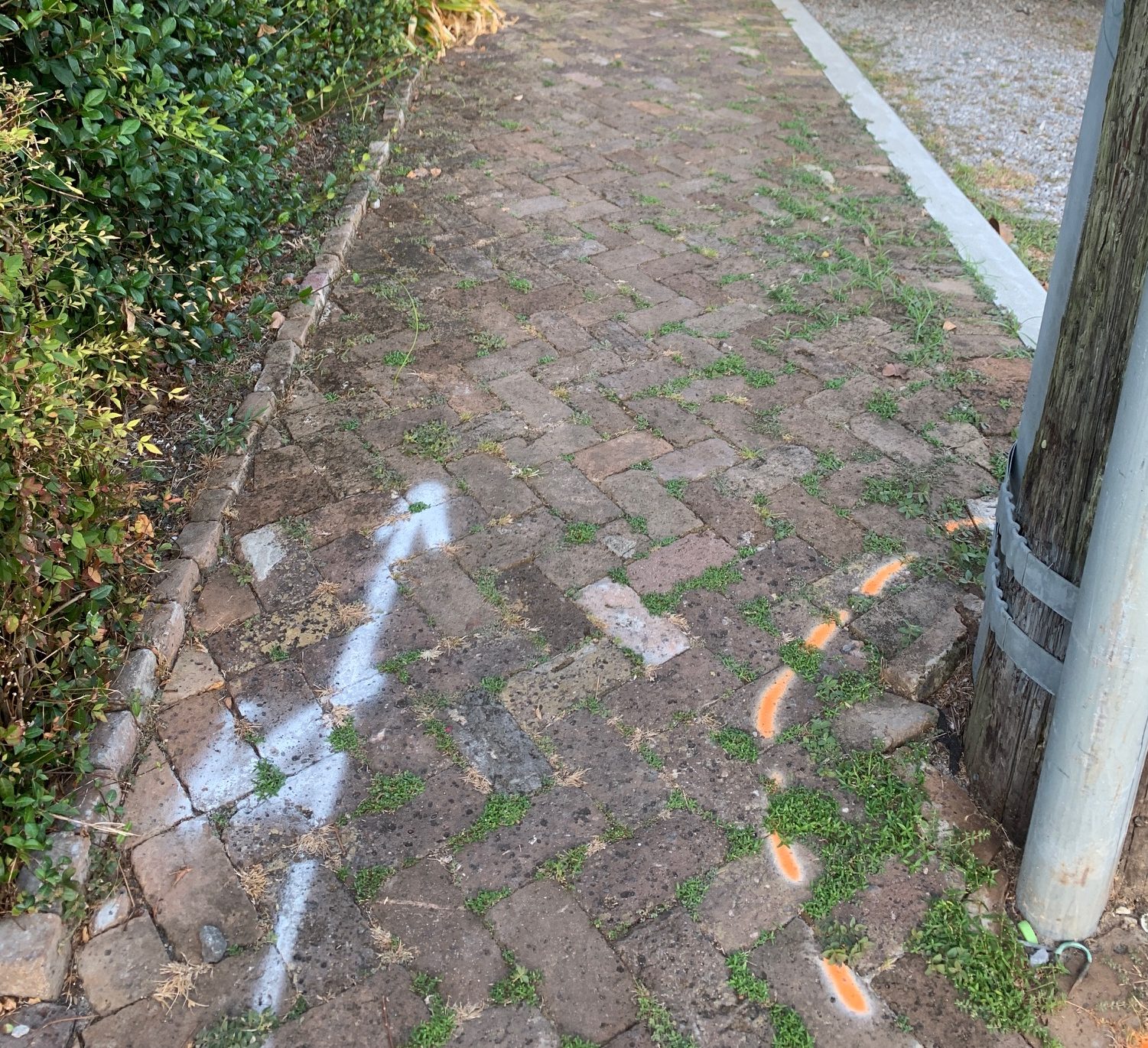
That’s not to say the City does nothing in the way of maintaining infrastructure.  Right now, New Orleans is replacing its low-pressure gas lines with high pressure lines.  Gas is a big deal where everyone eats red beans on Mondays, but it’s also useful for heating and, even now—still—for lighting.  So, every street must have new subterranean lines installed and new risers brought to gas meters.  I knew nothing of this until I awoke to find a crew with an excavator on my property destroying the curbs and antique brick sidewalks I’d lately installed at considerable expense. Continue reading →

Share this:

  • Click to email a link to a friend (Opens in new window) Email
  • Click to print (Opens in new window) Print
  • Click to share on X (Opens in new window) X
  • Click to share on Facebook (Opens in new window) Facebook
  • Click to share on LinkedIn (Opens in new window) LinkedIn
Like Loading...

Apple Card: Heavy Metal

03 Thursday Oct 2019

Posted by craigball in General Technology Posts, Personal, Uncategorized

≈ 3 Comments

IMG_4773I just got my Apple Card and, while I hardly need another credit card, I thought readers might be curious what the fuss is about. After all, it’s just a credit card, right?

Right, but it has some fancy features that set it apart from the other plastic in your wallet or purse.  First, it’s scarily easy to obtain.  On my iPhone, it took under a minute to be issued the electronic card with a $9,000 spending limit available in Wallet.  That was Tuesday.  Thursday morning, a courier dropped off the physical card packaged in the sleek style of all Apple’s premium products.  The fun began even before it was out of the box!

IMG_4777Although my Apple Pay credit account went live in a minute, as with all physical credit cards, the Apple Card must be activated before use.  For most cards, this requires time online or a phone call where you dial or speak a lot of digits.  With the Apple Card, you just hold the colorful sleeve it comes in against your iPhone and the NFC contactless communication capability embedded in the card does the rest.  

The next surprise is that the card is crafted from laser-etched titanium, giving it a striking heft and rigidity.  Hone the edge of this baby and you’re MacGyver (or Oddjob, hat in hand).  Investing so much in the aesthetics of a credit card may seem silly; but, I confess that the, well, the beauty of the card impressed me.  Is it so wrong that something we touch several times daily be pleasing?

The next surprise is what’s not on the Apple Card versus every other card: There are no numbers.  No card number.  No CID security identifier.  No expiration date.  No signature block.  Just your name, three corporate logos, a chip and a swipe strip.  Here are photos of both sides of my Apple Card, something I’d never post for a conventional card:

IMG_4771
IMG_4772

IMG_4774If you want to know the card number and CID for the Apple Card, you must retrieve them in Wallet.  That’s a genuine layer of security.  By the same token, heaven help anyone who comes across a neanderthal with a carbon charge slip (anyone remember those?) who tries to rub transfer the card number.

There are some nifty usage management features, but the major marketing hook for the Apple Card is daily cash back on purchases.  How much cash back?  I’m not entirely sure because it varies.  It seems you get three percent back for purchases made from Apple and a handful of other merchants like Walgreens and Uber.  But for the most part, the cash back percentage looks to be two percent if you pay with Apple Pay.  If a merchant isn’t set up for Apple Pay, then it appears you must use the Apple Card as a conventional MasterCard, and get just one percent cash back.  That’s about the same benefit I now get with my AmEx Membership Rewards program with (in my mind) less exposure to a whopping interest charge if I’m ever late with a payment.  Too, the AmEx offers many perks to protect my purchases and travel.  Now and then, those behind-the-scenes benefits have proven really worthwhile.   I wonder whether Apple will stand behinds its card users as reliably as AmEx?

Cash back is a splendid benefit, and beats the pants off cards that don’t offer rewards and perks.  So many cards do offer mileage benefits, club access and other rewards that it’s not easy to know which one is best.  The Apple Card carries no annual fee, making it worth a try, and if you buy a lot of Apple merchandise, that instant three percent back is a no-brainer.  Maybe the Apple Card will become my principal card; maybe not.  But, I’ll tell you one thing:  that titanium card is going to be hell to cut in half should I decide to close the account.

One last thing if it’s not already clear: Only iPhone users need apply.  An Android user might be able to finagle getting the Apple Card, but the real benefits only flow from using Apple Pay.

Share this:

  • Click to email a link to a friend (Opens in new window) Email
  • Click to print (Opens in new window) Print
  • Click to share on X (Opens in new window) X
  • Click to share on Facebook (Opens in new window) Facebook
  • Click to share on LinkedIn (Opens in new window) LinkedIn
Like Loading...

Who Am I If I’m Not That Guy Anymore?

09 Monday Sep 2019

Posted by craigball in Personal

≈ 24 Comments

This is a personal post.  I’m baring my soul in hopes that colleagues grappling with doubt and transition will know they are not alone.  I’m at a point in my career—in my life, really—where I’m obliged to ask, “Who am I if I’m not that guy anymore?”

At the ILTA conference last month, a colleague lately risen to rarified heights in e-discovery mentioned she’d heard I’d retired.  It was a dagger to the heart.  I sputtered that, yes, I’d cut back on my insane speaking schedule and was writing less frequently.  I was playing more but I hadn’t taken my shingle down.

That’s true, but what I didn’t say was that ofttimes retirement isn’t a choice.  It’s thrust upon you when you don’t fight it.  And you can’t always fight it.  I’m not retired; I’ve just conducted myself as if I were, and chickens have come home to roost.  Call it a crisis of confidence.  I struggle to feel I’ve got anything to say.  After more than 2,000 confident turns at the podium, I feel like a fraud.  Do you ever feel that, dear reader?  You know, Imposter Syndrome, that feeling that, at any moment, someone might point and say, “you’re not the real deal!”

Let’s put aside the quirks and tics of personality built on shame, insecurity and emotional scarring.  We’ve all got that.  I think there are three main causes behind my gnawing self-doubt.

The self-serving first is that, having focused on electronic evidence and forensic technology for thirty-odd years, new information must compete for brain space and context against a hoard of old knowledge and experience.  I started my professional career when MS-DOS was the dominant operating system and networking meant sharing a daisy wheel printer.  That was before e-mail, before the Web and long before mobile.  It was possible to be a generalist expert in legal technology, and I was.  Back then, you could ask me a question about almost any topic at TechShow and I probably knew the answer.  We all did.  WordPerfect tips?  Sure!  The best TSR tools for lawyers?  I’ve got that.  If you’ve never used WordPerfect or have no clue what “TSR” means, I rest my case.

Expertise demands I acquire new, relevant information and afford it space and ready access among all the once-useful-and-still-occasionally-valuable junk jamming the cerebral storeroom.  Did I mention I’m something of a hoarder?  It’s a godawful mess in there.

“I know too much” sounds like a Trumpian tweet, and it’s a rotten rationale from anyone.  That said, you try keeping track of the forensic artifacts left by Windows XP versus Windows 10, how to crack the latest iOS release and what counts as proof of intentional deprivation under Rule 37(e).  I can’t help feeling that life is simpler and confidence in one’s expertise easier to come by when your only context is “now.”

The second contributor to my crisis of confidence is that I’ve lost my laboratory.  I no longer work enough matters to feel at the top of my game.  It’s not the first time that’s happened.  Back when I was trying lawsuits, I spoke frequently about how to create and use demonstrative evidence.  I had many examples of visuals I’d built and used in my own cases.  They blew folks away.  As my practice shifted from first-chair trial lawyer to tech evangelist preaching the gospel of electronic evidence, I no longer built visuals for cases, and my inventory of salient examples grew stale.  I lost my laboratory.  I stopped making fresh discoveries; so, I stopped teaching demonstrative evidence.

As my engagement in cases has diminished over a few Big Easy years, so, too, has my need to navigate real-world challenges in computer forensics and electronic evidence.  I’ve lost my laboratory again and, without fresh challenges, I’m fresh out of insights.  I feel rusty, like I’m just an academic.

The third factor is harder to articulate, but it’s a sense that the world has moved on.  E-discovery has been “handled.”  Forensics is done more by tools than people.  Discovery service providers have commoditized and packaged the tasks I once thought lawyers would manage.  Civil trials have disappeared, and with them the need to authenticate, offer and challenge electronic evidence.  Lawyers no longer do much of what I was helping them to do–or perhaps I wasn’t helping them enough and they’ve found others easier or cheaper to work with.

I don’t discount the unrelenting passage of time either and my aging out (62 last week).  Many of my repeat clients have changed careers, retired or died.  I did nothing to replace them.  Most of the judges who knew me as a go-to guy for computer forensics and e-discovery are off the bench, either by retirement or blown by political winds having nothing to do with their abilities.

Finally, there is competition.  I had the field to myself for quite a while.  There are more people to go to now.  Are they as steeped in e-discovery and computer forensics as I am? Who knows?  More to the point, who cares?  Lawyers were never especially discriminating when hiring digital forensics and e-discovery experts; less so now.  I greatly benefitted from the fact that there weren’t many experts to choose from and amongst lawyers and judges, I enjoyed a high profile.  I always strove to be the real deal and supply correct answers; but, if I hadn’t, I’m not convinced anyone would have been the wiser.

I have not retired.  I’m still here, and I feel like I have another reinvention in me—a last, best act yet to come.  At the same time, I am not so clouded as to miss the signs auguring otherwise.  Starting over sounds at once exhilarating and exhausting.  I keep wondering: Who am I if I’m not that guy anymore?

I’m fortunate that, even lacking new direction, I enjoy the freedom to move on.   No one depends upon me and I have ample savings.  As my mother used to say, I just need to handle my money “so I have ten cents left to tip the undertaker.”

I won’t cut it that close and I’ve had a great run (not done, not done); but, I’m worried for those who followed me or found their own way into the field and still need to build their nest eggs.  Has it been a hard road?  Are they finding it difficult to make a happy living doing what once was so lucrative and exciting?  I worry that some followed me down a disappointing path.  If you have doubts as I do, please do not despair.  Take comfort in schadenfreude.  You are not alone, and when we all get to the same place, we can have a wonderful party and talk about it.

Share this:

  • Click to email a link to a friend (Opens in new window) Email
  • Click to print (Opens in new window) Print
  • Click to share on X (Opens in new window) X
  • Click to share on Facebook (Opens in new window) Facebook
  • Click to share on LinkedIn (Opens in new window) LinkedIn
Like Loading...

Electronic Storage in a Nutshell

06 Monday May 2019

Posted by craigball in Computer Forensics, E-Discovery, General Technology Posts, Personal

≈ 4 Comments

I’ve just completed the E-Discovery Workbook for the 2019 Georgetown E-Discovery Training Academy. The Workbook readings and exercises plot the path that evidence follows from the documents lawyers use in court back to the featureless stream of binary electrical impulses common to all information stored electronically. At nearly 500 pages, the technology of e-discovery is its centerpiece, and I’ve lately added a 21-point synopsis of the storage concepts, technical takeaways and vocabulary covered. Here is that in-a-nutshell synopsis:

  1. Common law imposes a duty to preserve potentially-relevant information in anticipation of litigation
  2. Most information is electronically-stored information (ESI)
  3. Understanding ESI entails knowledge of information storage media, encodings and formats
  4. There are many types of e-storage media of differing capacities, form factors and formats:

    a) analog (phonograph record) or digital (hard drive, thumb drive, optical media)

    b) mechanical (electromagnetic hard drive, tape, etc.) or solid-state (thumb drive, SIM card, etc.)

  5. Computers don’t store “text,” “documents,” “pictures,” “sounds.” They only store bits (ones or zeroes)
  6. Digital information is encoded as numbers by applying various encoding schemes:

    a) ASCII or Unicode for alphanumeric characters;

    b) JPG for photos, DOCX for Word files, MP3 for sound files, etc.

  7. We express these numbers in a base or radix (base 2 binary, 10 decimal, 16 hexadecimal, 60 sexagesimal). E-mail messages encode attachments in base 64.
  8. The bigger the base, the smaller the space required to notate and convey the information
  9. Digitally encoded information is stored (written):

    a) physically as bytes (8-bit blocks) in sectors and partitions

    b) logically as clusters, files, folders and volumes

  10. Files use binary header signatures to identify file formats (type and structure) of data
  11. Operating systems use file systems to group information as files and manage filenames and metadata
  12. File systems employ filename extensions (e.g., .txt, .jpg, .exe) to flag formats
  13. All ESI includes a component of metadata (data about data) even if no more than needed to locate it
  14. A file’s metadata may be greater in volume or utility than the contents of the file it describes
  15. File tables hold system metadata about the file (e.g., name, locations on disk, MAC dates): it’s CONTEXT
  16. Files hold application metadata (e.g., EXIF geolocation data in photos, comments in docs): it’s CONTENT
  17. File systems allocate clusters for file storage; deleting files releases cluster allocations for reuse
  18. If unallocated clusters aren’t reused, deleted files may be recovered (“carved”) via computer forensics
  19. Forensic (“bitstream”) imaging is a method to preserve both allocated and unallocated clusters
  20. Because data are numbers, data can be digitally “fingerprinted” using one-way hash algorithms (MD5, SHA1)
  21. Hashing facilitates identification, deduplication and de-NISTing of ESI in e-discovery

All of these topics and more are covered in depth at the Academy, punctuated by substantive and substantial hands-on exercises. We ask more of the students than most seasoned e-discovery professionals can deliver. It’s hours of effort before you arrive and a full week of day and night endeavor once you’re here. Over a thousand pages of written material covered in toto.  Really, no picnic.  A true boot camp.  It exhausts and overwhelms those anticipating conventional professional education; but those who do the work emerge transformed.  They leave competent, confident and equipped with new eyes for ESI. Think you can hack it? We can help. Hope to see you there June 2-7.

P.S. No member of the Academy faculty is compensated.  We are all volunteers, there because we believe the more you know about e-discovery, the more you can contribute to the just, speedy and inexpensive administration of justice.

Share this:

  • Click to email a link to a friend (Opens in new window) Email
  • Click to print (Opens in new window) Print
  • Click to share on X (Opens in new window) X
  • Click to share on Facebook (Opens in new window) Facebook
  • Click to share on LinkedIn (Opens in new window) LinkedIn
Like Loading...

The Computer Book: A Pleasant Stroll through the History of Computing

01 Friday Feb 2019

Posted by craigball in Computer Forensics, E-Discovery, General Technology Posts, Personal

≈ 6 Comments

I returned from frigid New York City last night, modestly triumphant that I hadn’t botched my interview with Watergate journalist and Fear author Bob Woodward.  Woodward turned out to be just the nicest guy and we got on swimmingly.  I shouldn’t be surprised as many of the highly successful people I’ve known have proved courteous and generous of spirit.  I guess nice guys finish first because we are happy to help them succeed.

In New York, heading to the Whitney to take in the excellent Andy Warhol retrospective, I happened on an architectural antiques store in the Meatpacking District called Olde Good Things.  I love such places and was delighted to find they were selling vintage Jacquard loom cards.  I collect (NERD ALERT!) examples of milestone computing technologies, especially antecedent digital storage devices like piano rolls, magnetic core memories and, now, Jacquard loom cards!  I use these for “show-and-tell” in my digital evidence classes.  In a touching twist, the cards I bought were salvaged from an abandoned lace factory in Scranton, Pennsylvania, the old coal town a/k/a Electric City where my father grew up and is laid to rest.  Here’s my acquisition:

This digression has a purpose.  Waiting for me on my return to New Orleans was a book I’d ordered called, “The Computer Book” by Simson Garfinkel and Rachel Grunspan.  It’s subtitled, “From the Abacus to Artificial Intelligence, 250 Milestones in the History of Computer Science;” but, don’t be put off by that mouthful; it’s a delightful read and a visual feast.  Each of the 250 well-curated, chronological milestones are flanked by gorgeous full-page photography.  Among them, Milestone 13, The Jacquard Loom:

The punched cards used in the Jacquard loom circa 1801 were later adapted by inventor Herman Hollerith to tabulate the U.S. Census in 1890 and were forerunner to the punched IBM cards that were a common medium to enter and store digital data from the 1930s through 1970s.  Another descendent: the punched paper tape I used to store BASIC computer programs in high school circa 1972.  Our modern computing feats are often smaller, speedier reimaginings of age-old technologies.  The Computer Book ably underscores that evolution.

I bought the book because I’ve followed Simson Garfinkel’s extraordinary career since he was a graduate student buying second hand hard drives and scaring the snot out of people by revealing how much sensitive “deleted” data could be resurrected via forensic file carving.  That’s common knowledge now, but largely because pioneers like Simson made it so.  Simson is Professor Garfinkel today as well as the Senior Computer Scientist for Confidentiality and Disclosure Avoidance at the US Census Bureau.  Shades of Herman Hollerith! Simson holds seven patents and has published dozens of articles on computer security and digital forensics.

I’m considering making the book required reading for my law classes–something I’ve not done before as I prefer my students not go out-of-pocket.  The Computer Book succeeds in being accessible to the lay reader in a way few books about computing match. To really understand technologies, laws or people, it pays to delve into their origins.  If I ran the world, The Computer Book would be required reading for anyone in the e-discovery space.

Share this:

  • Click to email a link to a friend (Opens in new window) Email
  • Click to print (Opens in new window) Print
  • Click to share on X (Opens in new window) X
  • Click to share on Facebook (Opens in new window) Facebook
  • Click to share on LinkedIn (Opens in new window) LinkedIn
Like Loading...

Meet Bob Woodward, Living Legend

14 Monday Jan 2019

Posted by craigball in E-Discovery, Personal, Uncategorized

≈ 5 Comments

Bob WoodwardIt’s almost that time, two weeks from LegalTech New York (okay, LegalWeek for those who hang on for more wintry weather) and the fine folks at Zapproved have again asked me to interview a gifted interviewer–on Broadway, no less–for the annual Corporate E-Discovery Heroes Awards.  I’ve had past fireside chats with Nina Totenberg, Doris Kearns Goodwin and Eugene Robinson.  My subject this year is Bob Woodward.

OMG BOB WOODWARD!

I’ll use the same two words Woodward himself uttered on June 17, 1972 as a cub reporter for the Washington Post covering an arraignment of five well-dressed Watergate burglars.  On hearing perpetrator James McCord whisper “CIA” when asked his employer, Woodward exclaimed:

HOLY SHIT!

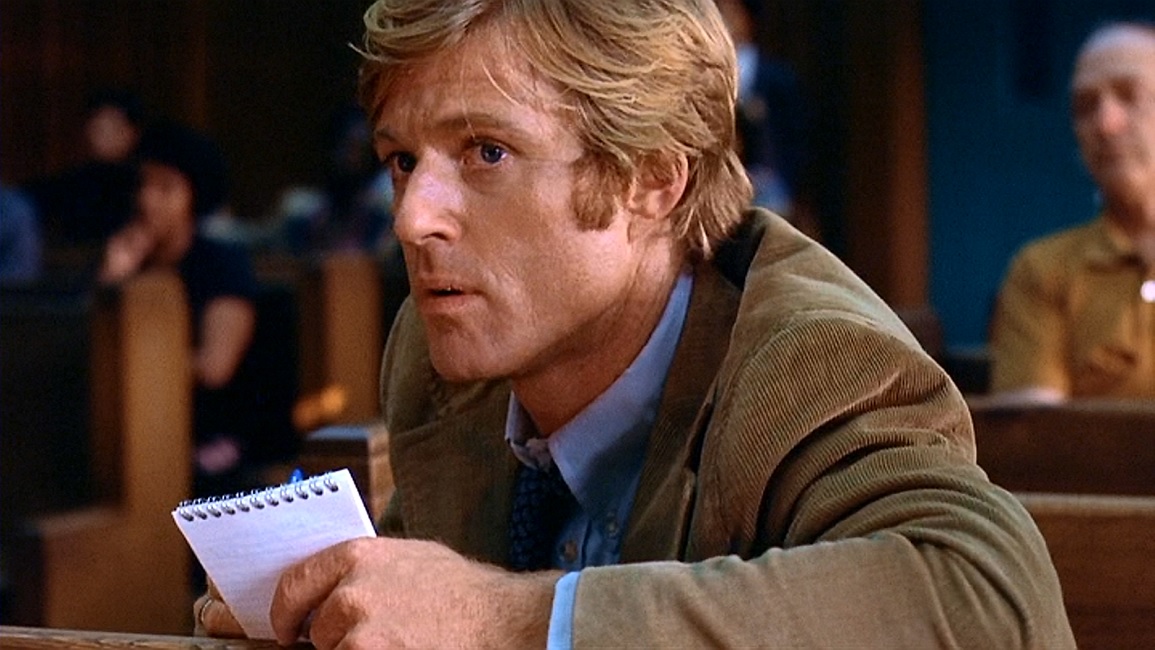
I mean, BOB WOODWARD!  Author of nineteen  books, thirteen #1 national bestsellers.  The dean of investigative journalism.  The 2019 PEN America Literary Service Award winner (per this morning’s New York Times).  The man who helped earn two Pulitzer Prizes for the Post.  The man who brought down a President.  Robert Redford played him in All the President’s Men.  Not pruney 2019 Redford, either.  We’re talking 1976 sex symbol Robert Redford!

So, yeah, HOLY SHIT!  BOB WOODWARD!

I better get this right. Will you help me?  In the comments below, I invite you to suggest questions I might pose to the living legend onstage.  Don’t worry.  Woodward wrote “Fear.”  We will talk Trump.

It’s a very special night in another way.  My dear, dear friend, the Honorable John Michael (yada, yada, yada) Facciola, will receive the 2019 Hon. Shira Scheindlin Lifetime Achievement Award in recognition of a career that has advanced the practice of electronic discovery.  The “yada, yada, yada” denotes that Fatch has more middle names than a British nobleman.  Fitting, as John Facciola is truly a noble man and richly deserving of this award.  I’m excited about who the presenters will be; but, I’m not spoiling that surprise.  You’ll just have to attend.

Honored as well will be four “Corporate E-Discovery Heroes,” nominated by their peers and selected by an esteemed panel of judges.  What? FINE! Esteemed and me.  Who won?  Like I said, you’ll just have to attend.  Please do.

Though seating is limited, tickets are still available, and dinner and drinks are included.  It’s going to be a hell of a party!  Don’t miss it.

Where: Edison Ballroom, 240 W 47th St, New York, NY 10036
When: January 28, 2019 at 6:00pm
Register by: January 25, 2019 11:59 PM Eastern Time

Bring your copy of Fear, All the President’s Men, The Final Days, The Brethren, Wired or one of the others.  No promises, but I bet you can get it signed by the man who inspired a generation of journalists.

Share this:

  • Click to email a link to a friend (Opens in new window) Email
  • Click to print (Opens in new window) Print
  • Click to share on X (Opens in new window) X
  • Click to share on Facebook (Opens in new window) Facebook
  • Click to share on LinkedIn (Opens in new window) LinkedIn
Like Loading...
← Older posts
Follow Ball in your Court on WordPress.com

Enter your email address to subscribe to this blog and receive notifications of new posts by email.

Join 2,230 other subscribers

Recent Posts

  • A Master Table of Truth November 4, 2025
  • Kaylee Walstad, 1962-2025 August 19, 2025
  • Native or Not? Rethinking Public E-Mail Corpora for E-Discovery (Redux, 2013→2025) August 16, 2025
  • Still on Dial-Up: Why It’s Time to Retire the Enron Email Corpus August 15, 2025
  • Chambers Guidance: Using AI Large Language Models (LLMs) Wisely and Ethically June 19, 2025

Archives

RSS Feed RSS - Posts

CRAIGBALL.COM

Helping lawyers master technology

Categories

EDD Blogroll

  • eDiscovery Journal (Greg Buckles)
  • Sedona Conference
  • Basics of E-Discovery (Exterro)
  • CS DISCO Blog
  • Illuminating eDiscovery (Lighthouse)
  • Corporate E-Discovery Blog (Zapproved )
  • Minerva 26 (Kelly Twigger)
  • E-Discovery Law Alert (Gibbons)
  • GLTC (Tom O'Connor)
  • E-D Team (Ralph Losey)
  • Complex Discovery (Rob Robinson)
  • The Relativity Blog
  • eDiscovery Today (Doug Austin)

Admin

  • Create account
  • Log in
  • Entries feed
  • Comments feed
  • WordPress.com

Enter your email address to follow Ball in Your Court and receive notifications of new posts by email.

Website Powered by WordPress.com.

  • Subscribe Subscribed
    • Ball in your Court
    • Join 2,082 other subscribers
    • Already have a WordPress.com account? Log in now.
    • Ball in your Court
    • Subscribe Subscribed
    • Sign up
    • Log in
    • Report this content
    • View site in Reader
    • Manage subscriptions
    • Collapse this bar
 

Loading Comments...
 

    %d